

Ancient Egyptians gave you paper, toothpaste, the 24-hour day, and the surgical checklist your dentist still follows. You use versions of their ancient egypt inventions before you finish breakfast. Once you see the pattern, you cannot unsee it in your own bathroom cabinet.
This list sticks to what papyri, tomb art, and surviving artifacts actually show scholars, not guesswork dressed up as history. By the end, you will know which everyday objects trace straight back to the Nile Valley.
Writing and Timekeeping Tools You Still Rely On
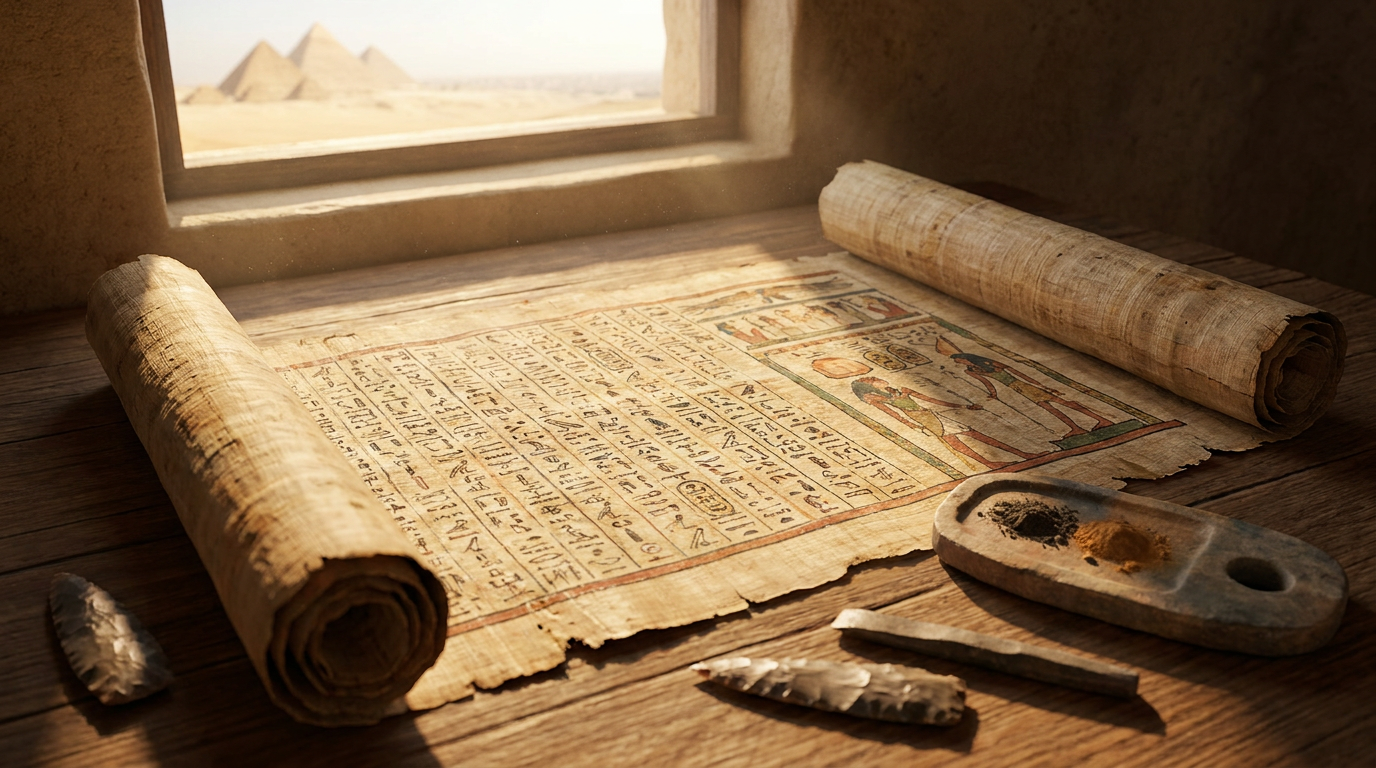
Papyrus came first. Egyptians pressed strips of the papyrus plant’s pith into sheets thousands of years ago, giving the world its first true paper and the root of the word itself.
Ink followed close behind. Scribes mixed soot or ochre with gum and water to write on that papyrus, a formula close enough to modern carbon ink that conservators still study it.
The 365-day calendar is another one you use without thinking. Egyptian priests tracked the Nile flood against the star Sirius and settled on twelve months of thirty days plus five extra days, a structure that shaped the calendar you check every morning.
Splitting a day into hours came from the same obsession with the sky. Egyptians divided daylight and darkness into twelve parts each using shadow clocks and water clocks, an early version of the clock you glance at right now. That habit of turning observation into a working system runs through Egypt’s architecture beyond the pyramids, where temple alignments track the same solar and stellar cycles.
Health, Grooming, and Security Habits Egypt Started First
Toothpaste is not a modern convenience. A recipe preserved on papyrus describes a paste of crushed rock salt, mint, dried iris flower, and pepper grains, meant to be rubbed on with a finger or chewed stick.
Breath mints existed too. Egyptians rolled frankincense and myrrh with honey into pellets to chew after meals, the ancient answer to the tin in your pocket.
Surgical practice got its first written manual in Egypt. The Edwin Smith Papyrus lays out case-by-case examinations, diagnoses, and treatments for injuries, including some of the earliest known descriptions of surgical stitching and wound assessment.
Locks needed solving too, and Egyptians built a wooden pin lock where pegs dropped into holes to block a bolt, the direct ancestor of the pin-tumbler lock in your front door.
Cosmetics rounded out daily grooming. Kohl eyeliner, ground from minerals like galena, doubled as sun glare protection and a status marker, worn by men and women alike regardless of where they sat in Egypt’s social pyramid.
Wigs finished the look. Egyptians wore wigs made from human hair or plant fiber over shaved heads, both for hygiene in the heat and for style, a tradition that outlasted the pharaohs by thousands of years. None of this happened by accident. A society that fed itself as reliably as Egypt did, based on what ancient Egyptians actually ate, had the surplus labor to spend on invention rather than just survival.
Frequently Asked Questions
Did ancient Egyptians really invent paper?
They invented papyrus, a paper-like writing material made from pressed plant pith. It predates true wood-pulp paper by thousands of years and gave paper its name.
Was ancient Egyptian toothpaste actually used daily?
Surviving papyri describe the recipe, though how widely it was used across social classes is not fully documented. It shows the practice existed, not how common it was for every household.
How accurate was the ancient Egyptian calendar?
It ran 365 days with no leap year adjustment, so it slowly drifted against the true solar year over centuries. Even with that drift, its twelve-month structure still underlies the calendar used today.