

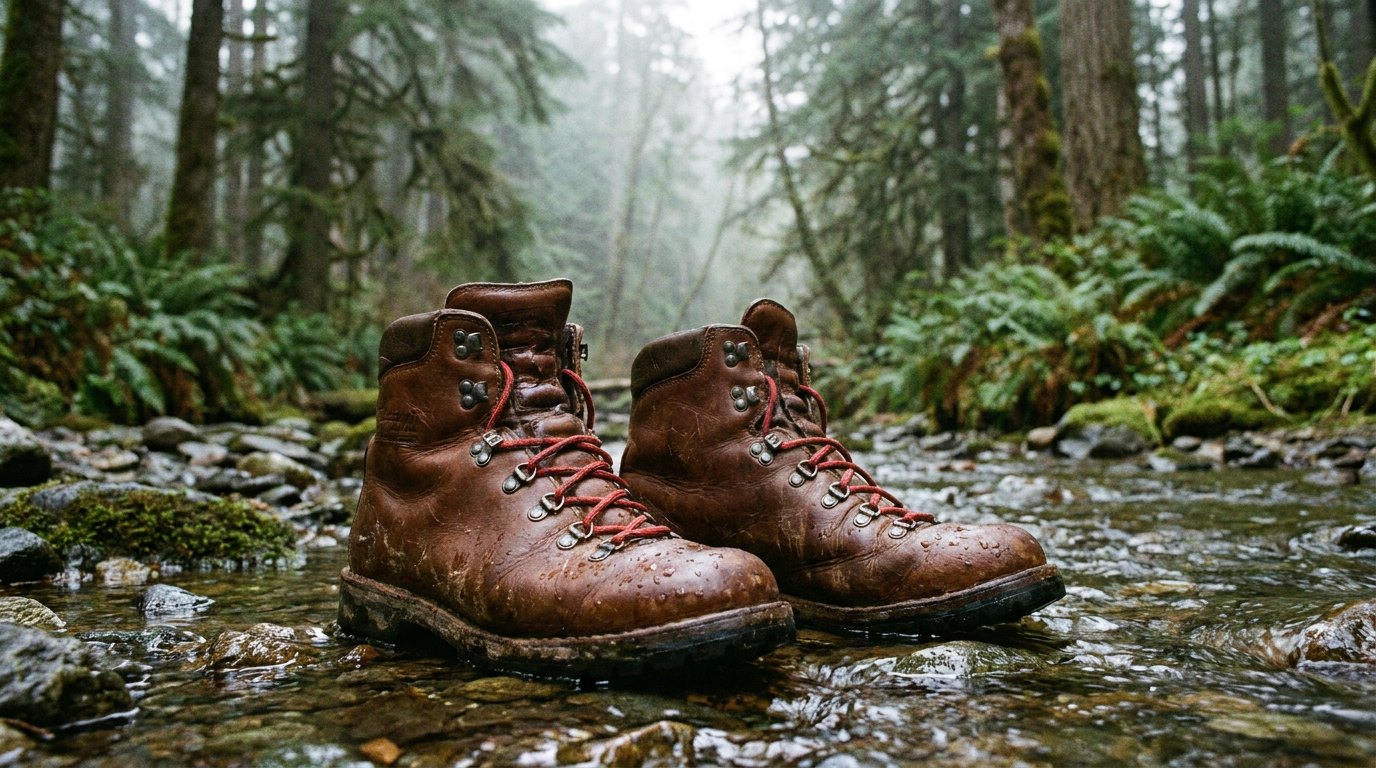
The best waterproof hiking boots for most wet-climate day hikers are the KEEN Targhee IV Mid and the Salomon X Ultra 5 Mid GORE-TEX. The best buy-once leather boot is the Danner Mountain 600 EVO, which Danner lists as recraftable.
Waterproof does not mean dry. The membrane is a lining inside the upper, so water can still come in over the top, and the nearest standard, the EU safety-footwear test, runs 4,800 flexes. Eleven pairs are compared below, with a cost-per-mile method you can rerun.
Our camping essentials guide already puts waterproof boots on the short list. Checked 25 October 2026.
KEEN Targhee IV Mid for a wide forefoot. Salomon X Ultra 5 Mid GORE-TEX if the load stays light.
Salomon Quest 5 GORE-TEX, the heaviest of the ten with a published weight, at 21 oz (595 g) per boot.
Danner Mountain 600 EVO, listed as recraftable. LOWA’s Renegade EVO costs the same and cannot be resoled by LOWA’s US partner.
Merrell Moab 3 Mid, after you read the leak reviews on its own page.
KEEN Targhee IV Mid has a generous forefoot, and Altra Lone Peak 9 lists a Wide (2E) option.
You hike in hot or humid weather, dry boots slowly, or wade above the collar.
Waterproof hiking boots compared: 11 pairs side by side
Weight is per boot as the maker states it. “Not stated” means we found nothing on the pages we read.
| Pair | Membrane | Weight per boot | Price tier | Repair path |
|---|---|---|---|---|
| Salomon Quest 5 GTX | GORE-TEX | 21.0 oz (595 g) | About $240 | Not stated |
| Salomon X Ultra 5 Mid GTX | GORE-TEX | 16.0 oz (454 g) | About $190 | Not stated |
| LOWA Renegade EVO GTX Mid | GORE-TEX | 20.8 oz (590 g) | $280 | Not resoled by LOWA’s US partner |
| KEEN Targhee IV Mid | KEEN.DRY | 20.1 oz (570 g) | About $190 | Resole not stated |
| Merrell Moab 3 Mid WP | Unnamed | 17.5 oz (495 g) | About $175 | Not stated |
| Columbia Newton Wander | Omni-Tech | 15.5 oz (439 g) | About $110 | Not stated |
| Oboz Sawtooth X Mid WP | B-DRY | 19.4 oz (550 g) | Not shown on page | Not stated |
| La Sportiva TX Hike Mid GTX | GORE-TEX Extended Comfort | 14.4 oz (410 g) | About $209 | Not stated |
| Danner Mountain 600 EVO GTX | GORE-TEX | 16.0 oz (454 g) | $280 | Recraftable |
| Altra Lone Peak 9 WP Mid | Hydroguard by Cosmo | 15.95 oz (452 g) | About $190 | Not stated |
| NORTIV 8 Armadillo FieldLite Mid | Unnamed | Not published | Under $100 | Not stated |
Source: nomad-labs spec review of manufacturer pages, checked 25 Oct 2026. Prices drift, so tiers are approximate, and the Oboz page showed no usable price. The nine men’s pairs with a published weight, which leaves out the La Sportiva because its page lists sizes 36 to 43, average 18.0 oz (511 g) per boot.
Bars on the cards are editor’s ratings from spec criteria, not trail tests (see method).
Best waterproof hiking boots for backpacking and heavy packs
Backpacking boots run to roughly 70 to 75 liters, and some have a 3 to 5 mm shank, the stiff insert under the arch, per an outdoor retailer’s guide. Our backpacking pillow guide says weight becomes critical past about 35 L of pack volume.
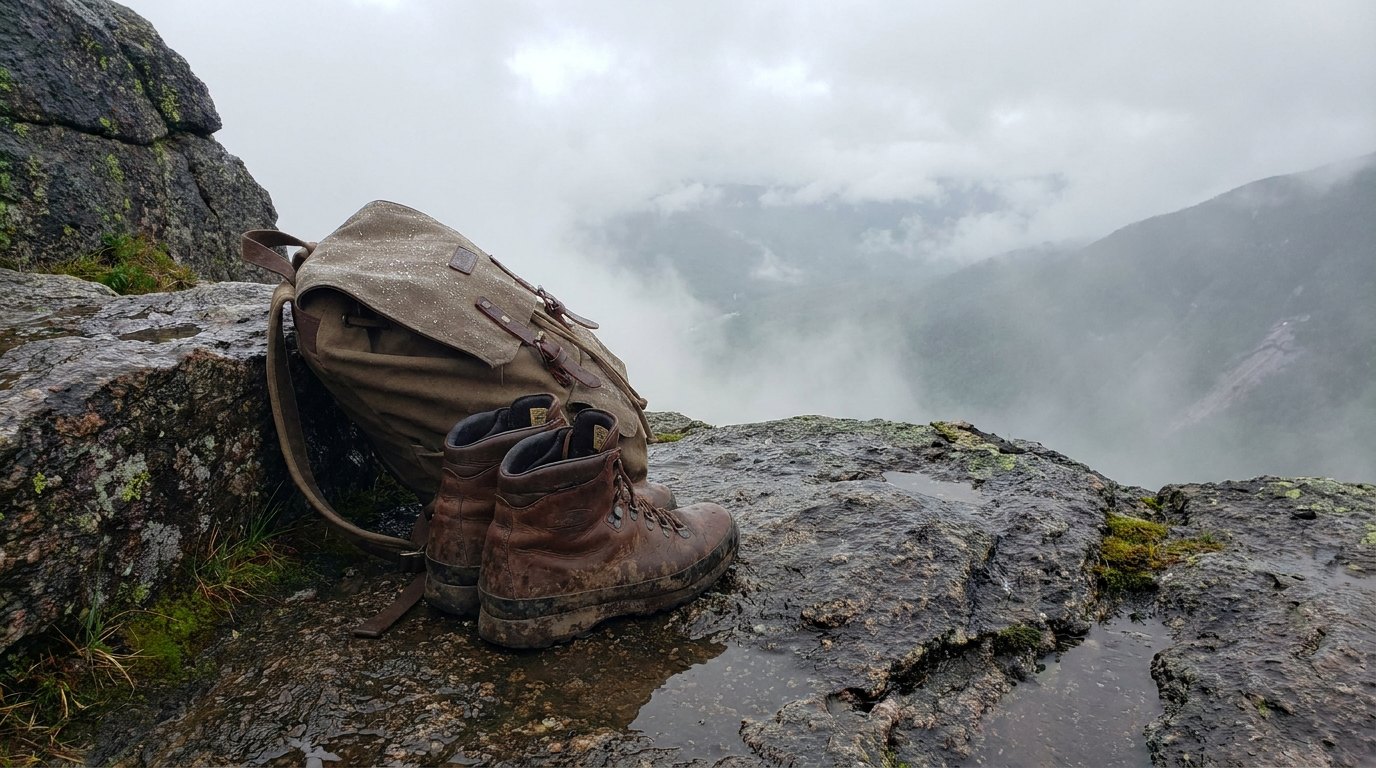
Salomon Quest 5 GORE-TEX
Salomon positions it for multi-day hikes on rocky ground, with a nubuck and ripstop upper, gusseted tongue, toecap and mudguard. In Salomon’s 62-response fit survey, 17.7% say it fits large.
- GORE-TEX
- 595 g per boot
- About $240
Source: Salomon product page, 25 Oct 2026.
Pros
- Built for multi-day loads
Cons
- Heaviest with a published weight
Skip it if you want a nimble boot or hike hot-weather day trips.
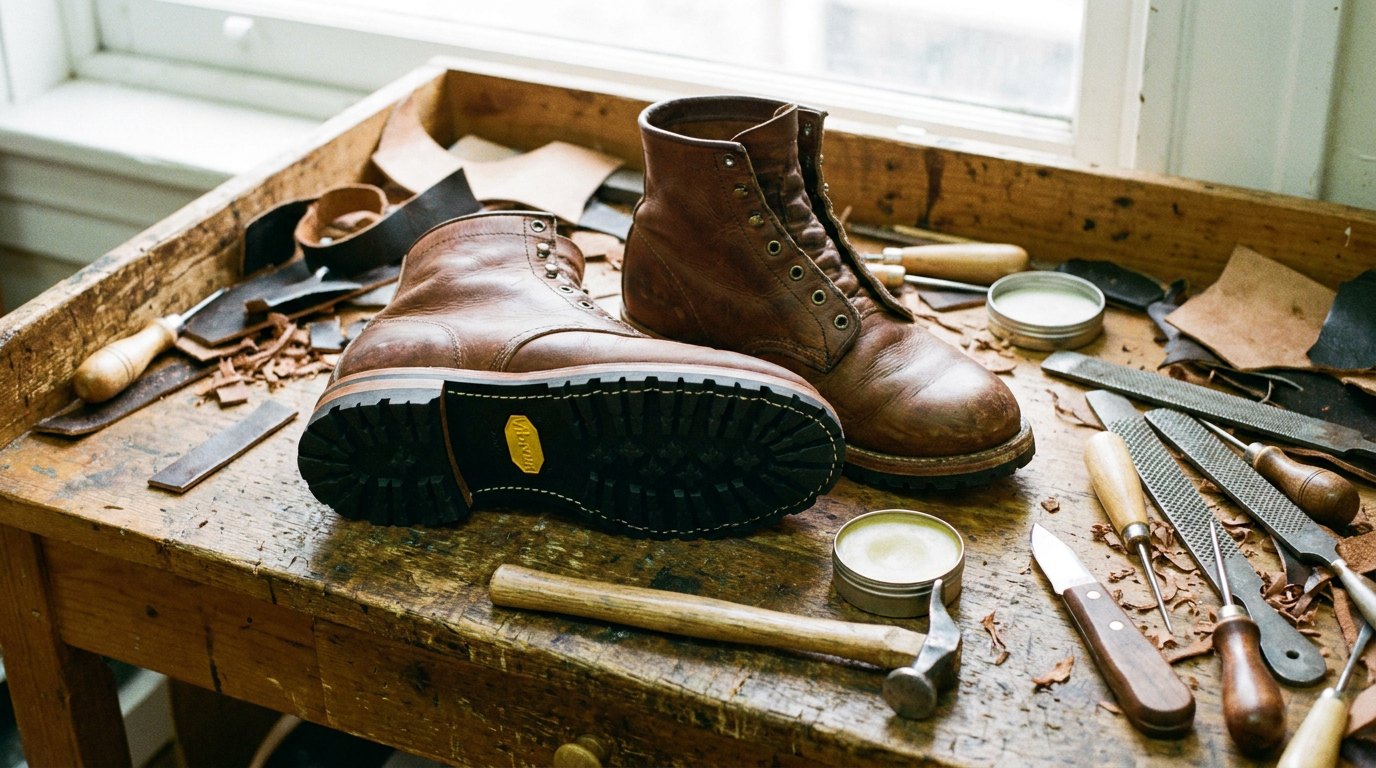
Danner Mountain 600 EVO GORE-TEX 4.5 in
The buy-once pick: full-grain leather over a GORE-TEX liner, listed as recraftable, with a 365-day warranty. Danner quoted a 4-week recraft turnaround but the pages we read publish no recraft price, and its Mountain 600 Leaf GTX qualifies only for a resole, so check the model.
- GORE-TEX
- 454 g per boot
- $280 tier
Source: Danner product page and recrafting page, 25 Oct 2026.
Pros
- Recraftable, light for leather
Cons
- Top price tier
Skip it if you hike in warm weather or the $280 tier is out of reach.
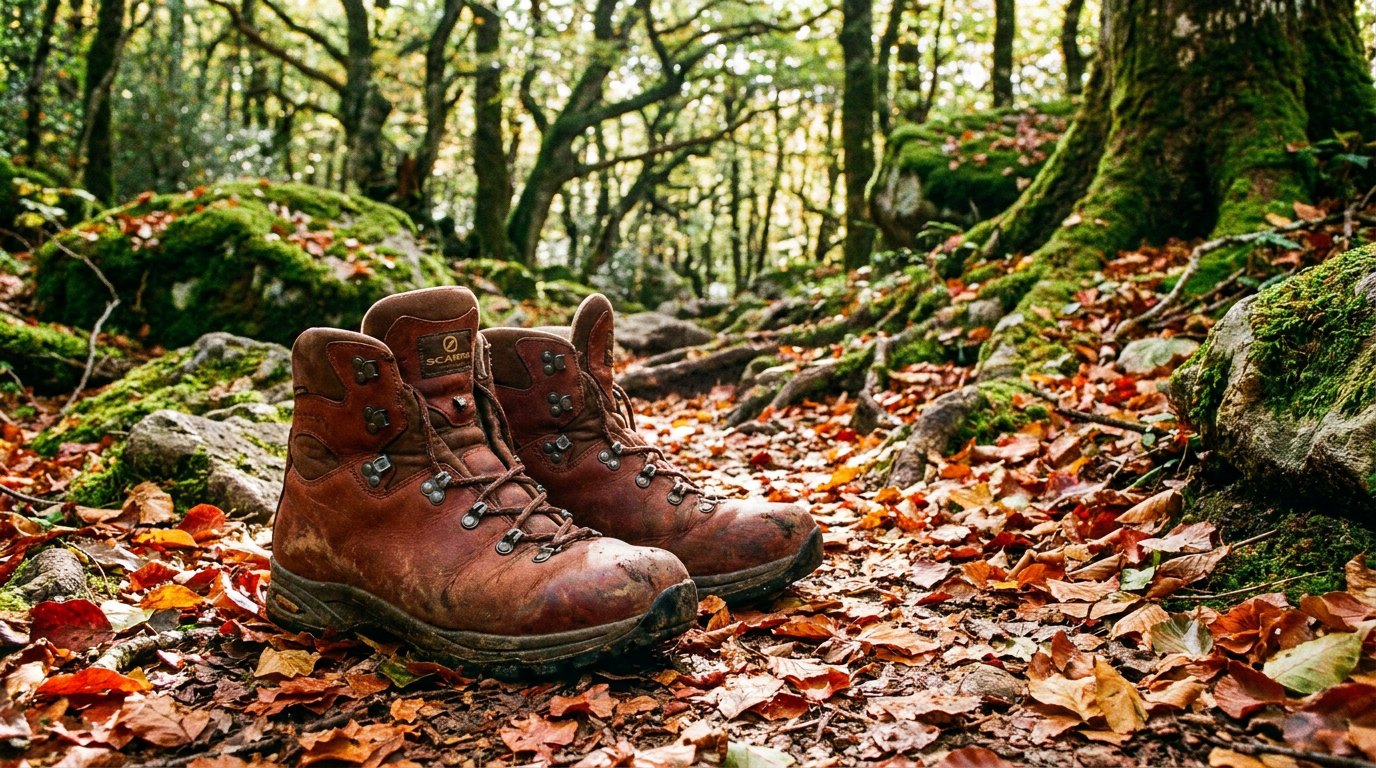
LOWA Renegade EVO GTX Mid
Nubuck, GORE-TEX lining, medium and wide widths, no intentionally added PFAS. The catch: LOWA’s US resole page says injected soles “such as the RENEGADE EVO and ZEPHYR MK2” cannot be resoled without compromising structural integrity.
- GORE-TEX
- 590 g per boot
- $280 tier
Source: LOWA product page and resole policy, 25 Oct 2026.
Pros
- Wide width offered
Cons
- No resole by LOWA’s US partner
Skip it if you are counting on a resole to stretch the price.
Best waterproof hiking boots for day hikes in wet weather
These four suit rain, mud and creeks where you can dry your boots the same night. The Merrell has leak comments, and the Oboz has no readable reviews.
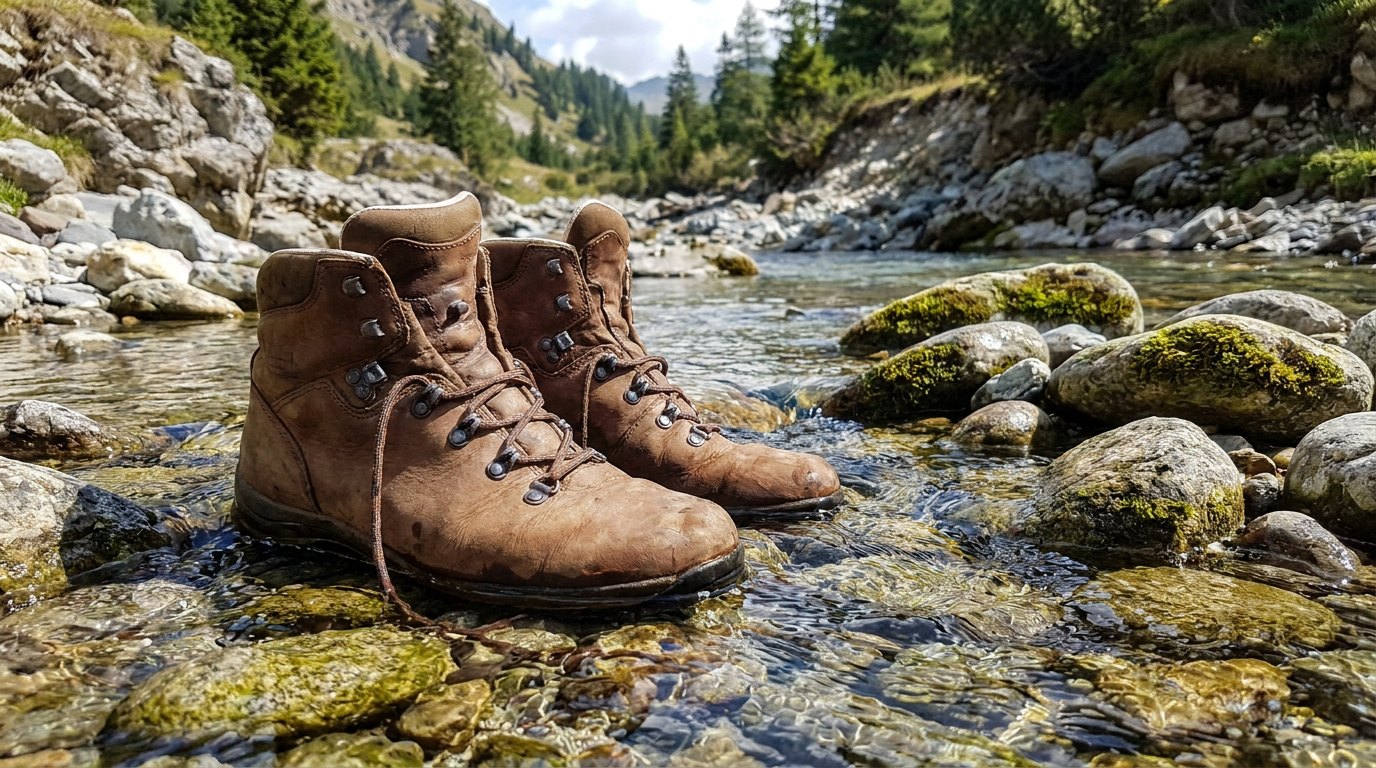
KEEN Targhee IV Mid Waterproof
Generous forefoot, KEEN.DRY bootie (a waterproof inner lining), nubuck upper, 5.12 in (130 mm) shaft. KEEN says the upper is fused to the sole without glue and “won’t delaminate (we guarantee it)”; we did not read the warranty terms, so treat that as a brand claim.
- KEEN.DRY
- 570 g per boot
- About $190
Source: KEEN product page, 25 Oct 2026. KEEN says every product is PFAS free.
Pros
- Wide forefoot
Cons
- Heavy end of the set
Skip it if you are a fast hiker who wants a light boot. KEEN itself points very warm weather toward sandals or vented shoes.
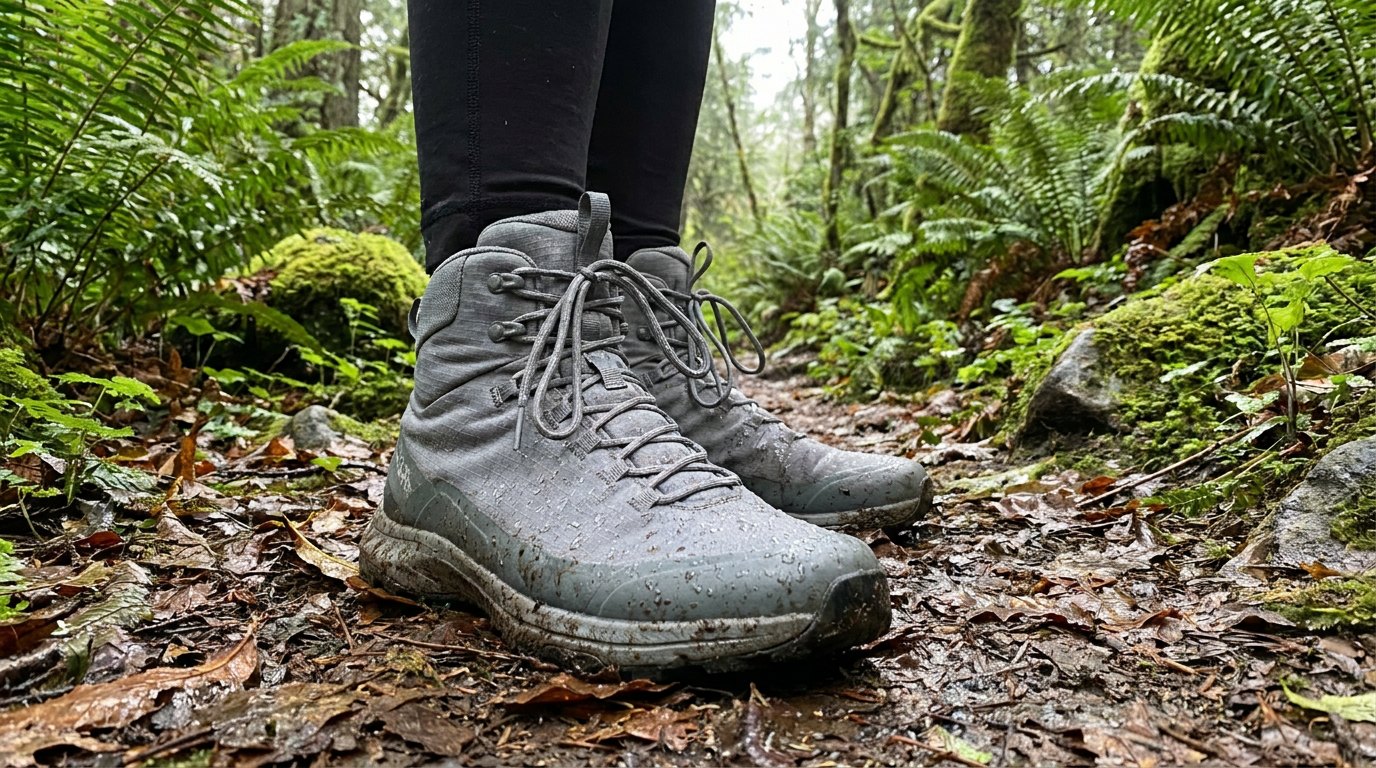
Salomon X Ultra 5 Mid GORE-TEX
The light all-rounder, rated by Salomon for full-day hikes. It has a PU-coated leather and textile upper with Matryx, foot protection rated High and forefoot support rated Standard.
- GORE-TEX
- 454 g per boot
- About $190
Source: Salomon product page, 25 Oct 2026.
Pros
- Light at 454 g
Cons
- Standard forefoot support
Skip it if you carry a heavy multi-day pack.
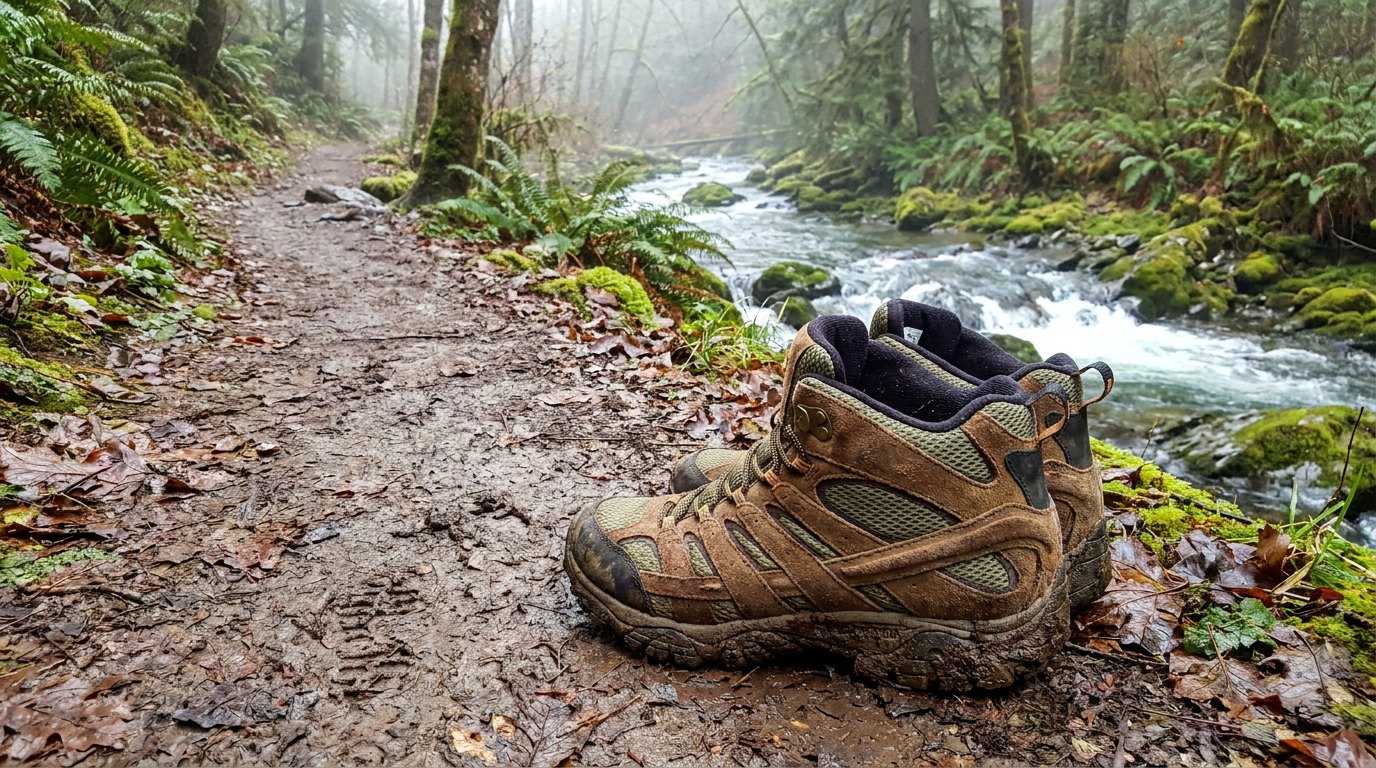
Merrell Moab 3 Mid Waterproof
Pig suede and mesh, Vibram TC5+ outsole with 5 mm lugs (the tread blocks), wide width. Merrell’s page shows 4.5 stars from 1,297 reviews. It also does not name the membrane, and the first reviews shown include “Leaked quickly and easily”; we read only those, so treat them as indicative.
- Membrane unnamed
- 495 g per boot
- About $175
Source: Merrell product page, 25 Oct 2026. A GORE-TEX version is sold separately at a higher price.
Pros
- Wide width, 5 mm lugs
Cons
- Unnamed membrane, leak comments
Skip it if you face long wet days or creek crossings, unless you buy the GORE-TEX version.
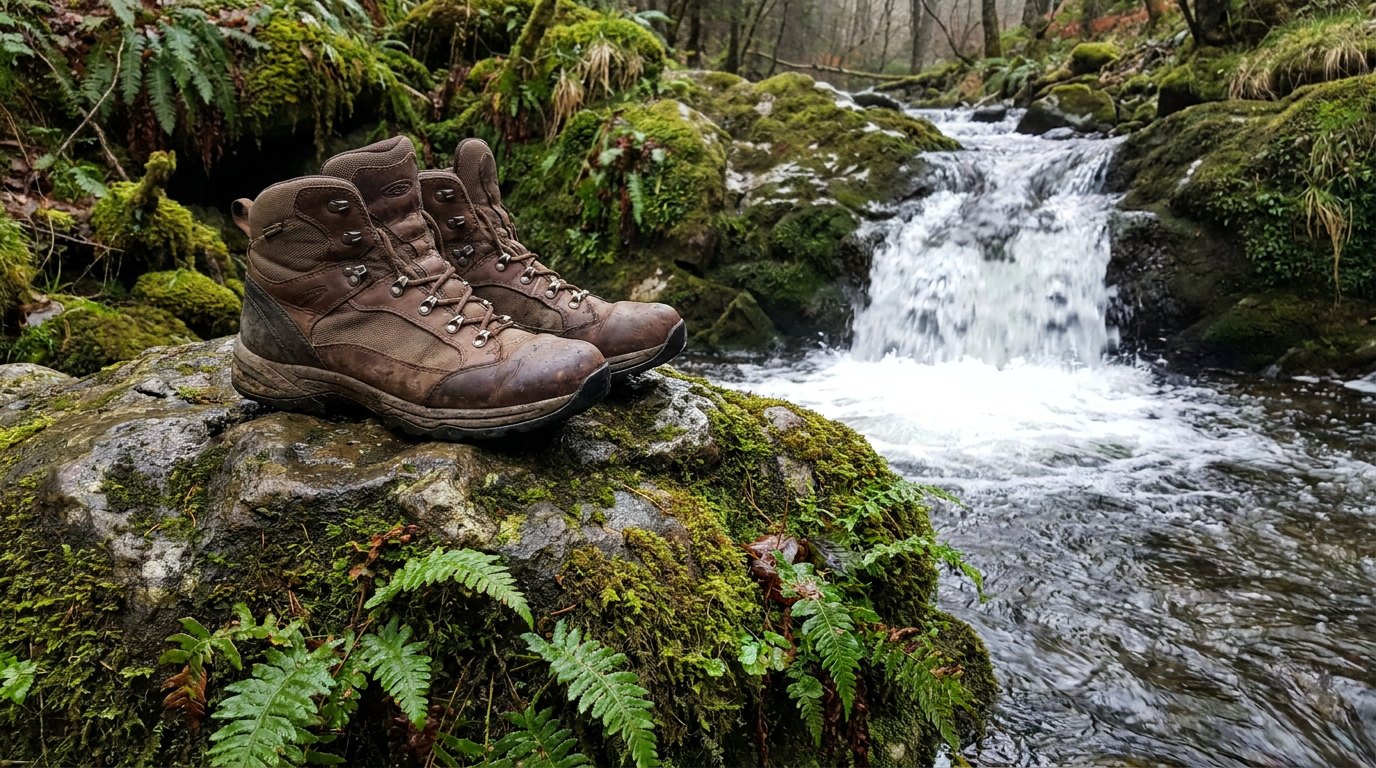
Oboz Sawtooth X Mid Waterproof
B-DRY membrane, 8 mm drop. Oboz lists a standard width (C heel, D forefoot), a medium-high volume, and Regular and Wide. Reviews sat behind a cookie gate, so we have no review data.
- B-DRY
- 550 g per boot
- Price not shown on page
Source: Oboz product page, 25 Oct 2026.
Pros
- Named membrane, Wide offered
Cons
- No usable price on its page
Skip it if you have narrow, low-volume feet.
Lightweight waterproof hiking boots
These two light pairs use mesh and not leather. That helps weight and drying, and it makes the outer fabric the thing to watch on stream days.
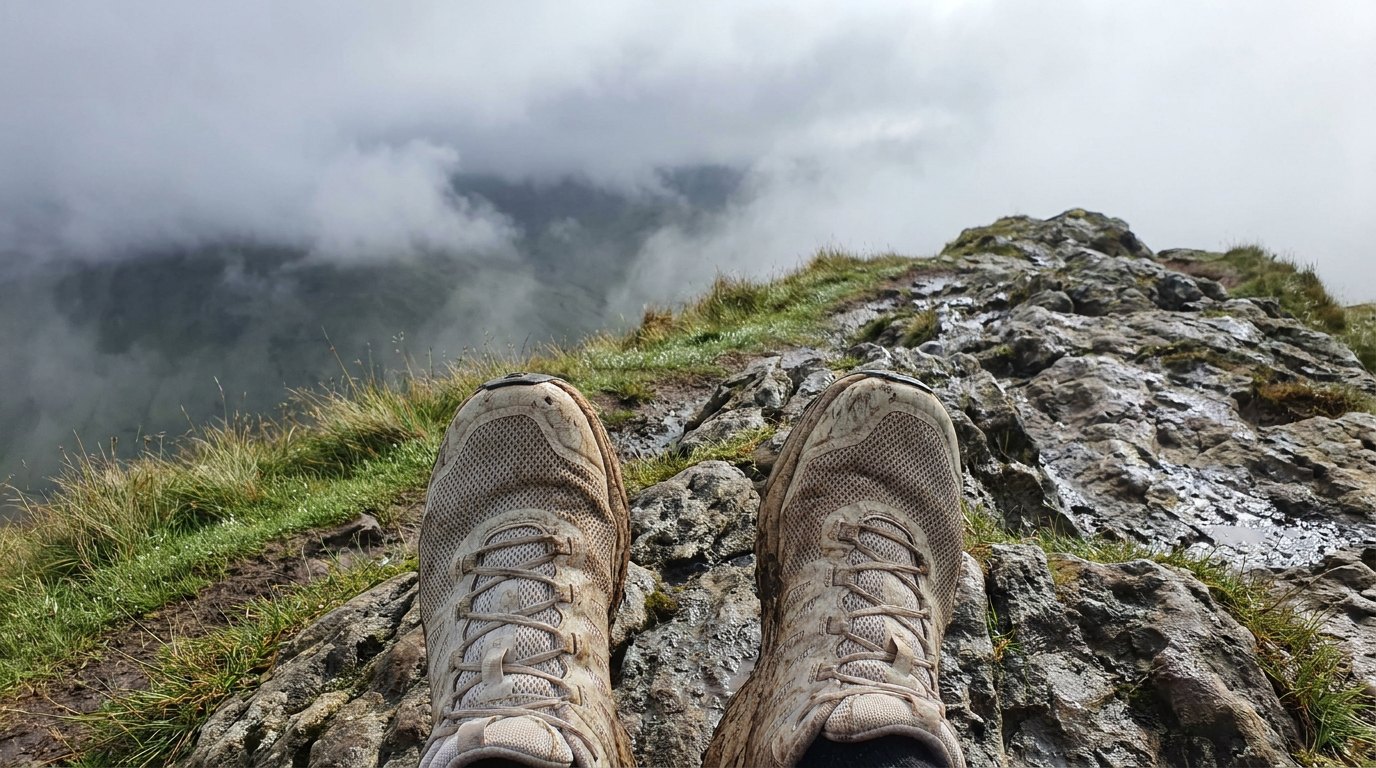
La Sportiva TX Hike Mid GTX
GORE-TEX Extended Comfort lining, recycled air-mesh upper, no intentionally added PFAS. The spec block lists sizes 36 to 43, and the page shows 4.0 stars from only 13 reviews, 60% recommending.
- GORE-TEX Extended Comfort
- 410 g per boot
- $209
Source: La Sportiva product page, 25 Oct 2026.
Pros
- Lightest pair here
Cons
- Small review sample, mesh upper
Skip it if you carry heavy loads or want a stiff boot.
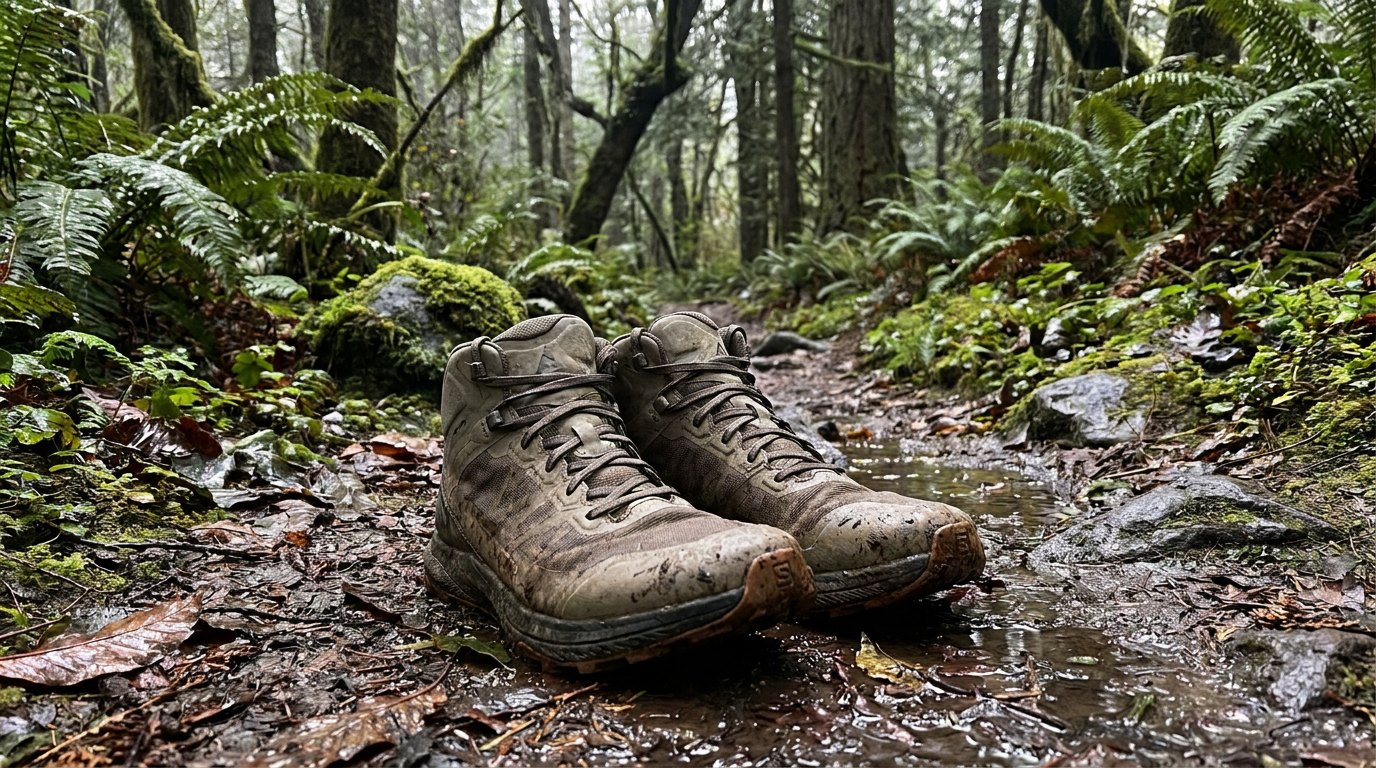
Altra Lone Peak 9 Waterproof Mid
The trail-runner crossover: Hydroguard membrane lining by Cosmo, a “100% PFC-free waterproof upper”, 0 mm drop and the Original FootShape, which Altra calls the roomiest toe box. A Wide option (2E, against standard D) and a 30-day trial are listed.
- Hydroguard
- 452 g per boot
- About $190
Source: Altra product page, 25 Oct 2026.
Pros
- Wide toe box
Cons
- Zero drop does not suit every calf
Skip it if you carry heavy packs or need strong ankle structure off-trail.
Cheap waterproof hiking boots
Both pairs come with evidence problems.
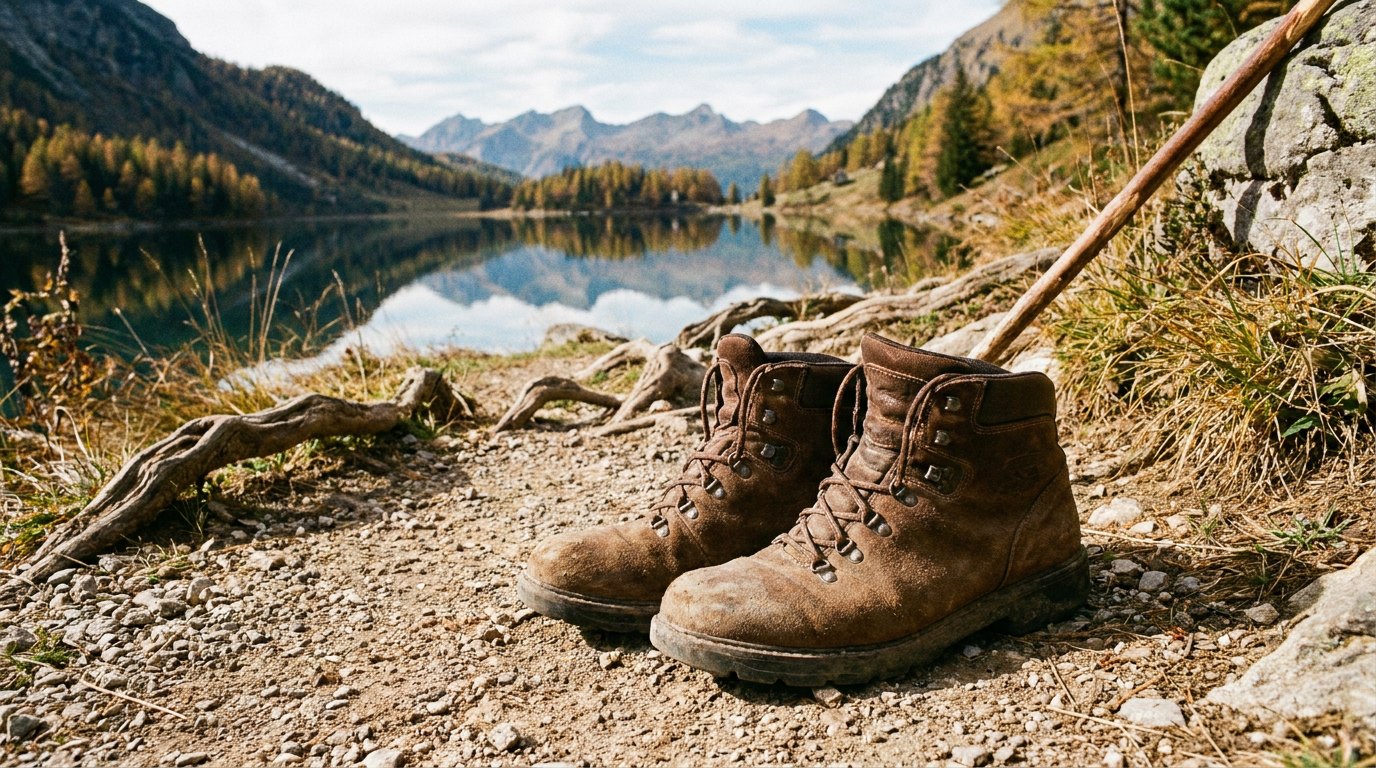
Columbia Newton Wander
Omni-Tech membrane, waterproof suede and textile upper, designed without PFAS, 60-day return window. The lugs are 2 mm, the shallowest of the four pairs that state lug depth, and the usual rule is deep, widely spaced lugs for mud. The page shows 4.0 stars from 25 reviews, 77% recommending.
- Omni-Tech
- 439 g per boot
- About $110
Source: Columbia product page, 25 Oct 2026.
Pros
- Light, 60-day returns
Cons
- 2 mm lugs, 25 reviews
Skip it if your routes are muddy, steep or rocky.
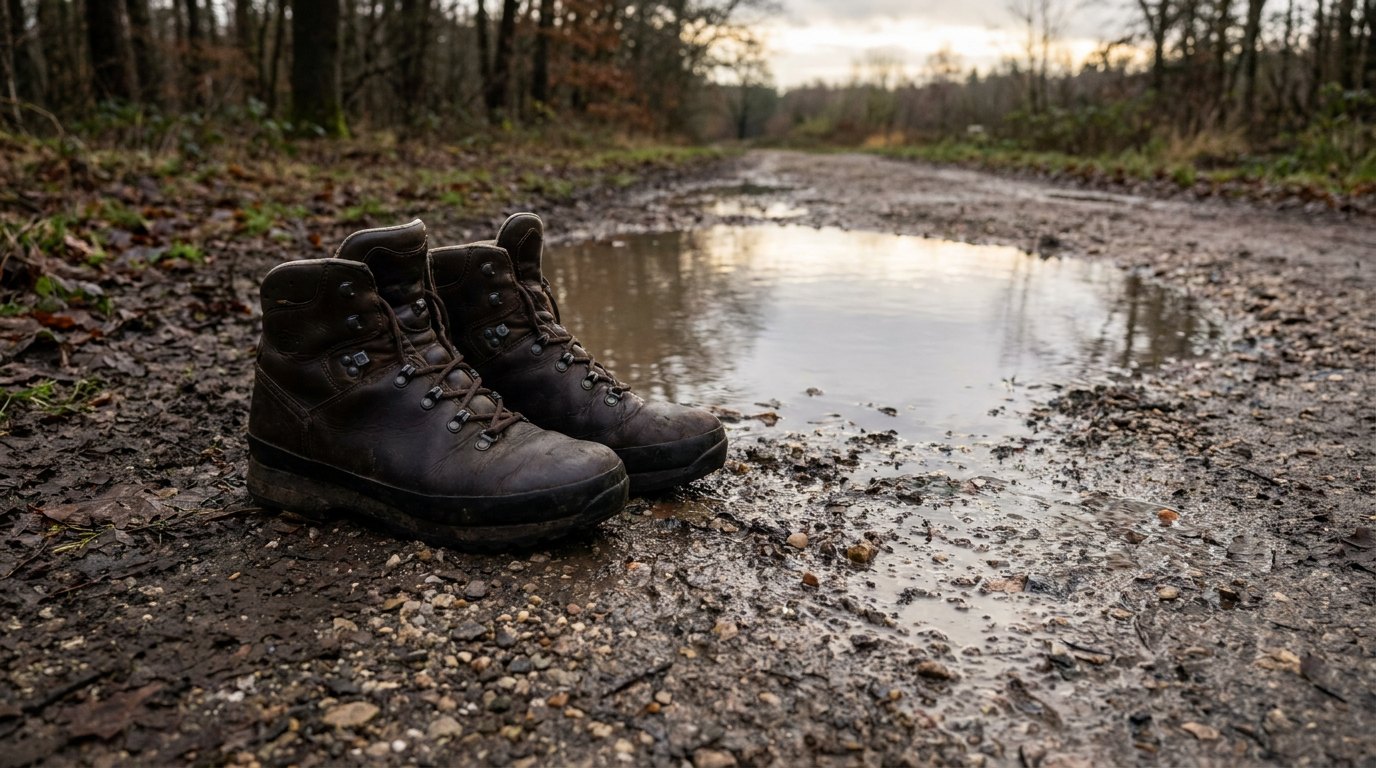
NORTIV 8 Armadillo FieldLite Mid
The only pair under $100, and the thinnest evidence: an unnamed “WaterproofPRO” membrane, no published weight, two reviews, and sold out when we opened the page. The brand’s own claim is “dry in puddles and shallow streams”, which sets its own limit.
- Membrane unnamed
- 4 mm lugs
- Under $100
Source: NORTIV 8 product page, 25 Oct 2026.
Pros
- Gusseted tongue, lowest price
Cons
- Two reviews, no weight
Skip it if you plan deep crossings or long mileage.
What waterproof hiking boots actually guarantee
KEEN separates three terms. Water-resistant fabric does not absorb water easily, water-repellent fabric is treated outside so water beads, and waterproof means a bootie, a waterproof inner lining, sits inside the upper.
We found no single standard that defines a waterproof hiking boot. SATRA describes the nearest one, EN ISO 20344 for EU safety footwear, which flexes the footwear 4,800 times with water 20 mm (0.79 in) above the featherline, the sole edge.
| Claim or test | Flexes | Stated by |
|---|---|---|
| EU safety footwear test (EN ISO 20344) | 4,800 | SATRA |
| “Industry standard” quoted by KEEN | 15,000 | KEEN |
| KEEN’s own standard, third-party random flex test in water | 50,000 | KEEN |
Source: SATRA bulletin and KEEN.DRY explainer, 25 Oct 2026.
These are different numbers from different sources, so do not rank brands by them. They show that “waterproof” has no fixed number behind it.
Which GORE-TEX type suits which boot
GORE-TEX sells three footwear technologies under one “guaranteed to keep you dry” promise. Footwear uses a pre-formed bootie. Invisible Fit bonds the membrane to the upper with no bootie. Surround vents moisture through the sole too, for warm conditions or higher activity.
Boots suit the bootie construction, and Invisible Fit suits lightweight uppers. If a maker uses its own membrane, ask for its published test claim. The GORE-TEX page we read is dated 4 August 2026.
Why waterproof boots still get wet
A waterproof boot feels wet for four reasons, and only one is the membrane. The Appalachian Mountain Club (AMC) article lists a saturated upper that kills breathability, socks that wick water down the collar, and a membrane puncture, the least likely.
SATRA adds wicking up the laces. The AMC author says rain pants, gaiters or both still let water work in.
- Check the outside for beading
A soaked upper with no beading is killing breathability. Clean and re-proof it.
- Check socks and trouser cuffs
Wet cuffs mean water ran down the leg into the collar. Add gaiters or rain pants over it.
- Check where the damp sits
Water at the laces or tongue only points to wicking, not a hole.
- Run a bucket test
Put dry paper towel inside and stand the boot in water. This is a simple home version of the lab’s tissue-paper method, and one wet spot can mean a puncture or seam failure.
How to choose waterproof hiking boots in six questions
- Do you need waterproof at all?
Yes if you hike in rain, snow, mud or wet brush, cross streams, hike in cold, or dry boots the same night. No in hot or humid weather.
- How deep are your crossings?
A boot is waterproof to the top of its collar. KEEN’s Targhee IV Mid shaft is 5.12 in (130 mm) and Danner’s Mountain 600 EVO is 4.5 in; above that, add gaiters.
- How big is your pack?
Under 35 liters, a day boot or shoe, per an outdoor retailer’s guide. Up to roughly 70 to 75 liters, a boot with a stiffer midsole; confirm the shank on the maker’s page.
- What ground are you on?
Deep, widely spaced lugs for mud, shallower and tighter for wet smooth rock. Columbia’s 2 mm and Merrell’s 5 mm show the range here.
- What upper can you maintain?
An outdoor retailer’s guide gives full-grain leather excellent durability and very good water resistance, with the least breathability and a long break-in. Synthetics are lighter and dry faster, but show wear sooner.
- What is your foot shape?
LOWA, Merrell, Oboz and Altra list a wide option, and KEEN builds a generous forefoot.
A worked case: October in the Pacific Northwest, a 40 L pack, a wide forefoot, a budget near $200. Rain and creeks mean waterproof.
Pick a mid-weight boot with a stiffer midsole, such as the KEEN Targhee IV Mid or the Altra Lone Peak 9 in Wide (2E), and confirm the shank on the maker’s page.
Planning a remote-work stay near trails? The Bansko guide covers Pirin National Park hiking, and the Hunza Valley guide covers multi-day treks to Passu Glacier.
Hiking boots waterproof or not: when to skip the membrane
Skip waterproof in hot weather. An outdoor retailer’s guide says a membrane may encourage feet to sweat on summer days, and KEEN says very warm weather calls for sandals or vented quick-dry shoes. We found no sourced temperature for “too hot”, so we will not invent one.
The same retailer calls trail runners cooler for hot-weather hikes and boots warmer for cold-weather ones.
Skip it too when you wade above the collar, or when wet boots will not dry overnight on multi-day trips. The AMC article says a saturated upper kills breathability, so a boot that stays wet keeps getting worse.
How waterproof boots should fit, and how to break them in
Per an outdoor retailer’s guide, try boots on in the afternoon, when feet swell, with your hiking socks and orthotics. Pull the insole out, stand on it and look for a thumb’s width between your longest toe and the end.
Fit should be snug everywhere and tight nowhere, with room to wiggle your toes.
LOWA’s letters show why a women’s “wide” is not wide by men’s standards.
| Width | LOWA men’s | LOWA women’s |
|---|---|---|
| Narrow | C | A |
| Medium | D | B |
| Wide | E or EE | C |
Source: LOWA product page, 25 Oct 2026.
Sizing advice conflicts. LOWA says to order your street size, and Danner says to size down half a size if you are between sizes. One roundup we read says to size up only when you are between sizes, so rely on a try-on and walk an incline.
Flexible shoes need little or no break-in, and light hikers may feel perfect out of the box. Burly boots need time: wear them indoors, then around town, then on the trail with a daypack. Do not soak the boots to speed it up.
Socks, gaiters and wet-foot injuries
Avoid cotton. An outdoor retailer’s guide says to wear synthetic or wool socks, add liner socks, and change to dry ones when your feet get wet. It lists blister causes as pressure, friction and moisture.
Our camping checklist asks for two pairs per day in wet terrain. Sealskinz sells waterproof socks with a hydrophilic membrane as the middle of three layers.
Per the same retailer, mid-calf gaiters run 8 to 12 in (20 to 30 cm) and knee-high versions 15 to 18 in (38 to 46 cm). Taller gaiters are generally hotter.
The CDC says trench foot, or immersion foot, comes from long periods of wet feet and hurts, swells and feels heavy. Prevention is clean, dry feet and socks, and affected feet get a 5-minute warm soak. Read the CDC’s trench foot guidance.
Cost per mile and how long waterproof boots last
One boot maker’s published estimate is 500 to 1,000 miles (805 to 1,609 km) for hiking boots, and an outdoor retailer’s guide says trail-running shoes break down after roughly 500. Cost per mile is the price divided by the miles of life you expect.
| Page price used | Pairs | At 500 miles | At 1,000 miles |
|---|---|---|---|
| $79.99 | NORTIV 8 Armadillo Mid | $0.16 | $0.08 |
| $110 | Columbia Newton Wander | $0.22 | $0.11 |
| $175 | Merrell Moab 3 Mid WP | $0.35 | $0.18 |
| $190 | Salomon X Ultra 5, KEEN Targhee IV, Altra Lone Peak 9 | $0.38 | $0.19 |
| $209 | La Sportiva TX Hike Mid | $0.42 | $0.21 |
| $240 | Salomon Quest 5 | $0.48 | $0.24 |
| $280 | Danner Mountain 600 EVO, LOWA Renegade EVO | $0.56 | $0.28 |
Source: nomad-labs calculation at manufacturer page prices checked 25 Oct 2026 and the mileage estimate above. Oboz is omitted because its page showed no usable price.
At 250 miles a year, that is 2 to 4 years. No primary source gives a waterproof lifespan, so the membrane or the DWR, the water-repellent finish on the outside, may fade before the outsole wears out.
Resoling does not rescue an expensive pair on cost alone. The $110 pair sets the bar at $0.22 a mile over 500 miles. The $280 pair needs about 1,270 miles of life to match it, or about 1,750 miles with one $105 resole ($385 in total).
The model must also qualify. LOWA names Tibet, Camino, Ranger, Lady Light and Alpine Expert II as resoleable, and the Renegade EVO is not among them. The $105 is one cobbler’s published price for resoling Crispi boots, a single data point and not a quote.
Retire a pair when the DWR cannot be restored and the inside is wet in normal use, or when the midsole, outsole or membrane is gone.
How to clean and re-waterproof hiking boots
Re-treat when water stops beading and rolling off, per GORE-TEX and an outdoor retailer’s guide.
GORE-TEX allows lukewarm water with a small amount of liquid detergent. A retailer’s care guide says none, because additives can harm leather or membranes. Nikwax says detergents leave a water-absorbing film. Follow your maker’s care card.
- Clean
Remove laces and insoles, brush off dirt and rinse. Never use a washing machine.
- Dry slowly
Normal temperature, low humidity, a fan or newspaper you change when damp, no heat source. Keep wet boots in the vestibule, as our camping gear guide suggests for muddy boots.
- Treat the outside
Use a leather waterproofer on leather and a nubuck-and-suede product on those uppers, applied to clean, wet boots. Nikwax’s Nubuck and Suede Proof, a PFAS-free example, goes on from 6 in (15 cm), with excess wiped after 2 minutes and then air drying.
GORE-TEX says water-based pump spray, no waxes or greases, and to check the maker’s instructions for leather shoes. Membrane areas need cleaning only.
- Store them well
Not in attics, garages or car trunks. For mold, use 80% water and 20% vinegar.
Mistakes that cost you
Putting wet boots next to a heater or in a hot car. GORE-TEX says to avoid direct heat, and the retailer’s guide says no heat source.
Using wax-based proofer and then expecting to resole. The retailer’s guide says the residue impairs the new adhesive.
Waxing or greasing a GORE-TEX boot, washing any waterproof boot in a machine, or soaking boots to break them in.
Wearing cotton socks, which the retailer’s guide says to avoid.
Believing the logo covers the collar. A membrane lining sits inside the upper, and water can wick in from above.
Wearing a membrane boot in hot weather, when the guide says feet may sweat more.
How we compared these waterproof hiking boots
We did not wear-test any boot. We compared specs: each maker’s product page, care instructions, the test-standard documentation, the resole or recraft page where one exists, and public health guidance on wet feet.
All of it was opened on 25 October 2026. The how-to sections also draw on retailer care guides, the AMC article, one boot maker’s life estimate and one cobbler’s price page, and test roundups were read only for orientation.
Each bar is an editor’s rating from 0 to 100. Wet protection scores whether the membrane is named and how the collar and tongue are built. Lightness follows the stated weight.
Repair path scores 90 for recraftable, 30 where the maker says no resole, and 50 where the page states nothing.
NORTIV 8 publishes no weight, so its Lightness bar is replaced by Evidence on the page. Models change, so check the maker’s page before you buy.
None of the eleven pages we read publishes a breathability figure, and we could not source how long a boot stays waterproof.
We did not read KEEN’s or GORE-TEX’s warranty terms. Kids’ boots and winter-insulated boots were not researched, and the La Sportiva page lists sizes 36 to 43 only.
Final picks by situation
KEEN Targhee IV Mid, or Salomon X Ultra 5 Mid GORE-TEX for lighter loads.
Salomon Quest 5 for heavy packs, Danner Mountain 600 EVO to recraft.
La Sportiva TX Hike Mid at 410 g per boot, or Altra Lone Peak 9.
KEEN Targhee IV Mid for a generous forefoot, or Altra Lone Peak 9 in Wide (2E).
Merrell Moab 3 Mid, after the leak reviews.
You want LOWA’s Renegade EVO for a resole, or any membrane boot for hot weather.
Questions about waterproof hiking boots
Are waterproof hiking boots worth it?
They are worth it in rain, snow, mud, wet brush and stream crossings, or in cold, if you can dry them the same night. They are a poor choice in hot weather, where KEEN suggests sandals or vented quick-dry shoes. They also fit badly on multi-day trips where drying is slow.
Are waterproof hiking boots really waterproof?
Not completely. A membrane is a lining inside the upper, so water can still come in over the top, through the laces or down your socks. The EU test behind the word uses water 20 mm above the sole edge for 4,800 flexes, and KEEN calls 15,000 flexes the industry standard and tests to 50,000.
Are waterproof hiking boots breathable?
Less than non-waterproof boots, and none of the eleven pages we read publish a breathability figure. A saturated upper kills breathability further, which is why re-proofing matters. Feet are the second-sweatiest part of the body after the armpits, so some dampness inside is normal.
How long do waterproof hiking boots last?
One boot maker estimates 500 to 1,000 miles for hiking boots. No primary source gives a waterproof lifespan, so the membrane or the DWR may fade before the outsole wears out. Retire a pair when you cannot restore beading and the inside is wet in normal use.
How do you re-waterproof hiking boots?
Clean the boots, then apply a proofer made for the upper to clean, wet boots and dry them slowly with no direct heat. Re-treat when water stops beading. Use a leather waterproofer on leather, a nubuck and suede product on those uppers, and no wax or grease on GORE-TEX.
Is GORE-TEX better than other waterproof membranes?
Not automatically. GORE-TEX Footwear, with a bootie, is the natural construction for boots, and Invisible Fit suits lightweight uppers. KEEN states a 50,000-flex internal standard against a 15,000-flex industry standard for its own KEEN.DRY, so compare each maker’s published test claim.
Should you size up in waterproof hiking boots?
Not by default. LOWA says to order your street size, and Danner says to size down half a size if you are between sizes. One roundup we read says to size up only when you are between sizes, so try boots on in the afternoon with hiking socks and walk an incline.