

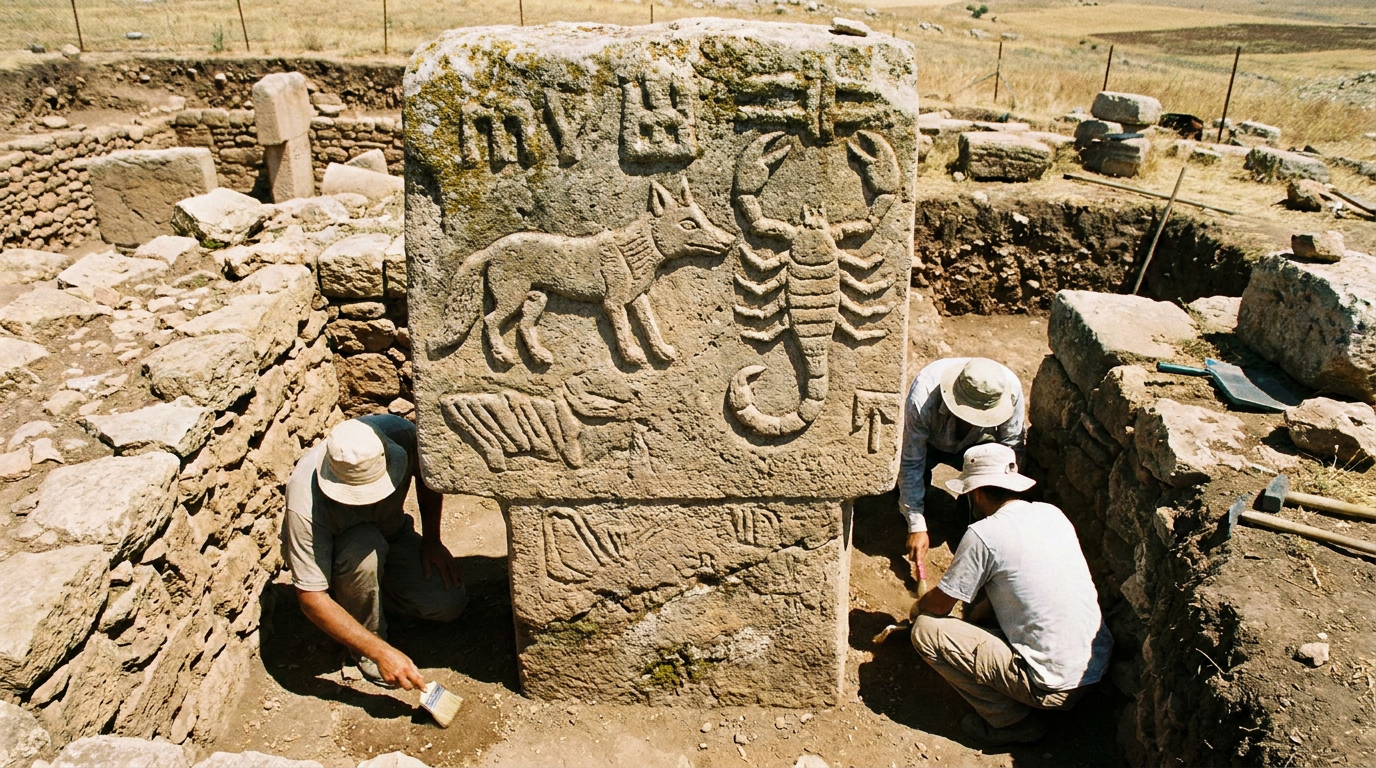
The carved animals at Gobekli Tepe likely functioned as symbolic guardians or clan markers tied to death rituals, not decoration. That is the leading reading from archaeologist Klaus Schmidt’s excavation team, built on decades of fieldwork at the site in southeastern Turkey. Nothing here is settled fact. Read on and you will understand why foxes, scorpions, and vultures dominate the pillars, and why researchers still argue over what those animals meant to the people who carved them roughly 11,000 years ago.
What Schmidt’s Team Found Carved Into the Pillars
Gobekli Tepe’s T-shaped limestone pillars, some over five meters tall, are ringed with low-relief carvings of foxes, boars, snakes, scorpions, and birds of prey. Schmidt, who led excavations from 1995 until his death in 2014, argued the site was a ritual gathering place built before farming or pottery existed. You are looking at organized symbolic thought carved into stone before permanent villages existed, part of why so many ancient megaliths continue to defy easy explanation.
The Fox Carvings: Guardian, Totem, or Something Else
Foxes appear repeatedly on the pillars of Enclosure D, often carved in pairs flanking the central T-shaped stones. Schmidt’s team proposed the fox may have served as a guardian figure or a clan emblem watching over the pillar it decorates.
This remains a hypothesis, not confirmed meaning. Some researchers floated the idea that different enclosures represent different social groups, each identified by its dominant animal. Plausible, but unproven.
The Scorpion Reliefs and the Cult of the Dead
Scorpions show up on several pillars alongside vultures and headless human figures, a combination that led Schmidt to propose a “cult of the dead” centered on the site. In this hypothesis, the carvings relate to funerary practice rather than hunting scenes.
The scorpion specifically has been linked by some team members to danger and protection of the dead, echoing symbolic roles scorpions held in much later Near Eastern cultures. Treat it as one interpretation among several competing ones.
Why the Vulture Stone Draws the Most Debate
Pillar 43, nicknamed the Vulture Stone, carries the site’s most discussed carving: a vulture with an outstretched wing positioned above a headless human figure, alongside a scorpion and other creatures. Schmidt’s team connected this scene to sky burial, where the dead are exposed to birds of prey rather than buried.
That reading fits the cult of the dead framework, but it interprets an image rather than documenting a ritual. A separate, far more speculative claim, that the Vulture Stone encodes a comet impact date, comes from outside researchers and lacks support from Schmidt’s team or mainstream archaeology. File it as intriguing, not verified.
Why Meaning Is So Hard to Pin Down Here
Gobekli Tepe predates writing by thousands of years, so no accompanying text exists to translate. Every interpretation of the animal carvings rests on comparison and inference rather than testimony from the people who made them, much like open questions around how monumental ancient structures were actually built.
What the carvings do confirm is that hunter-gatherer societies around 9500 BCE were capable of organized labor and shared ritual planning well before agriculture. That fact reshaped how archaeologists rank the building blocks of civilization, a debate tied to broader questions about what counts as real evidence for advanced prehistoric capability.
Frequently Asked Questions
What animals are carved at Gobekli Tepe?
The pillars feature foxes, boars, snakes, scorpions, and vultures, along with other birds, carved in low relief across multiple enclosures.
Does the vulture carving really depict sky burial?
Schmidt’s team proposed this reading based on the vulture positioned over a headless human figure, but it is an interpretation, not a confirmed ritual practice.
How old are the Gobekli Tepe carvings?
The site is widely dated to roughly 11,000 years old, placing construction around 9500 BCE, well before farming or pottery appear in the archaeological record.