

Percy Fawcett never called his target “Z” in public writing the way the film does. He called it a lost stone city, likely in the Xingu basin of the Brazilian Amazon, based on an 18th-century document he studied at Rio’s National Library. In 1925 he vanished into that jungle with his son Jack and Jack’s friend Raleigh Rimell, and no confirmed trace of any of them turned up. The real notes describe a stubborn surveyor chasing one document too far, a theory later archaeology partly vindicated.
What Document Sent Fawcett Into the Amazon
Fawcett based his search on Manuscript 512, a document describing a ruined stone city with arched gateways, supposedly seen by a Portuguese bandeirante expedition in the 1700s. His journals used “Z” as shorthand for target coordinates, a working label, not a mythic name he broadcast to sponsors.
He combined the manuscript with indigenous accounts and prior surveys of Bolivia and Brazil for the Royal Geographical Society, and by 1925 he was convinced the city sat in the Xingu region. He traveled with a minimal party so no rival could steal credit.
Why the 1925 Expedition Disappeared Without a Trace
Fawcett, Jack, and Rimell left the last outpost, Dead Horse Camp, in late May 1925. Fawcett’s final letter to his wife Nina said he expected no contact for months and told her not to worry if nothing arrived. Nothing reliable ever did.
Dozens of search parties went in after him over the following decades, and several died or vanished themselves. No verified remains or personal effects have ever been authenticated. That silence, not a dramatic ending, is the real story.
What LIDAR Later Found in the Same Region
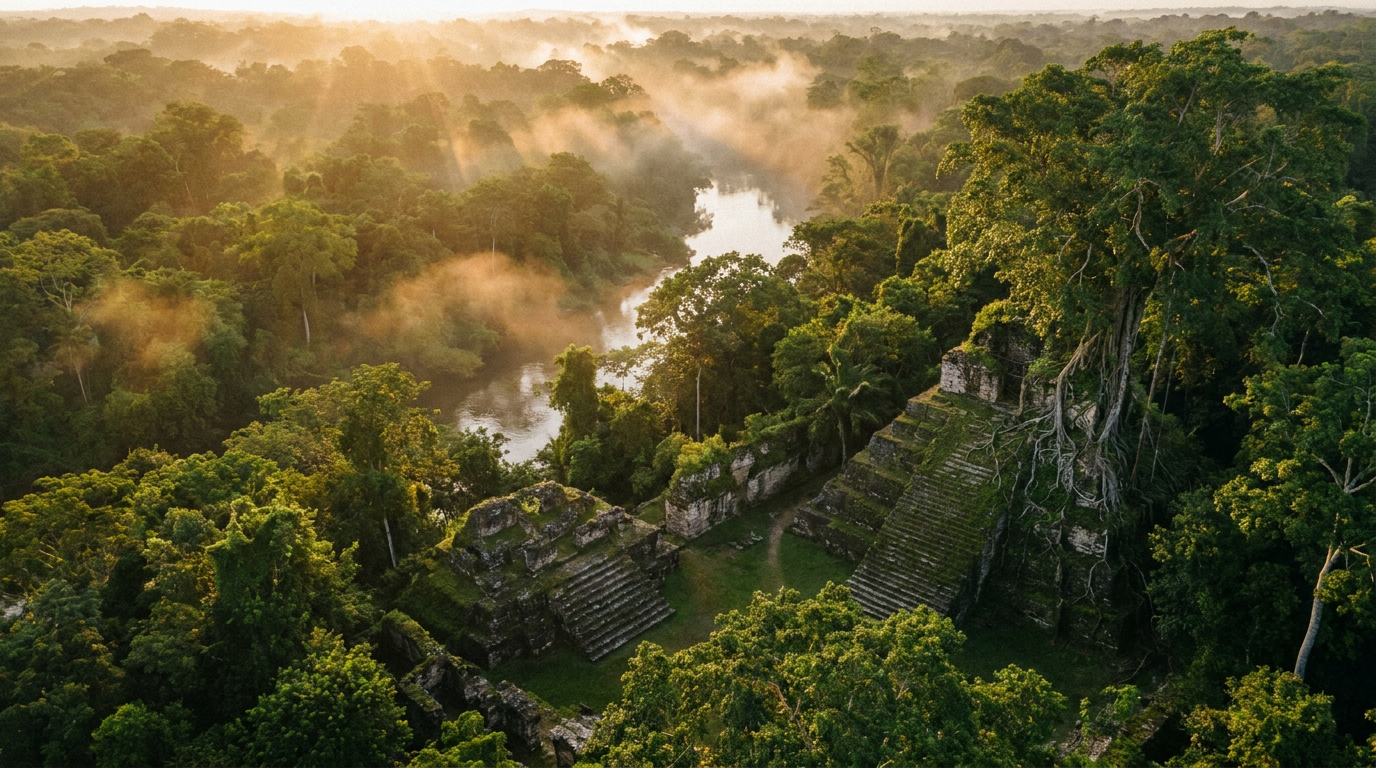
Decades after Fawcett vanished, airborne LIDAR surveys over the upper Xingu revealed clusters of pre-Columbian settlements, including the area archaeologists call Kuhikugu, with causeways, plazas, and earthworks linking villages into a planned regional network. These findings, tied to research led by archaeologist Michael Heckenberger and collaborators, showed organized settlement roughly in the geography Fawcett had targeted.
This is not the single walled stone city of Fawcett’s manuscript. It is a dispersed network of earthen and wooden settlement connected by roads, not masonry towers with arched doors. His specific stone-city claim remains unproven, but his broader instinct that the Amazon hid organized, populous societies turned out closer to reality than most of his contemporaries believed.
The reasoning here echoes the debate around the lost city of Atlantis location theories, where a source document gets stretched further than the original author intended.
How the Movie Changed Fawcett’s Story
The 2016 film builds its narrative around redemption, a father restoring his family’s honor. Fawcett’s actual writings read more clipped: survey notes, supply lists, terse observations about hostile terrain.
The film compresses two decades of expeditions into one heroic push and gives Z a mystique his notebooks do not support. He was a surveyor chasing a lead, not a mystic pursuing a destiny.
FAQ
What was Percy Fawcett actually looking for?
A stone city he believed existed in the Xingu region of the Amazon, based on Manuscript 512 and indigenous accounts, not a mythical or supernatural place.
Did Percy Fawcett ever find the Lost City of Z?
No. He, his son Jack, and Raleigh Rimell disappeared in 1925 and no confirmed trace of any of them has ever been found.
Did archaeologists ever find the Lost City of Z?
LIDAR surveys found extensive pre-Columbian settlement networks near Kuhikugu in the same general region, though not the single walled stone city Fawcett described.
The gap between Fawcett’s manuscript and what LIDAR mapped says something about how lost-civilization claims get tested. See the Atlantis myth breakdown and the roundup of lost civilizations once dismissed as myths for the same treatment applied elsewhere.