

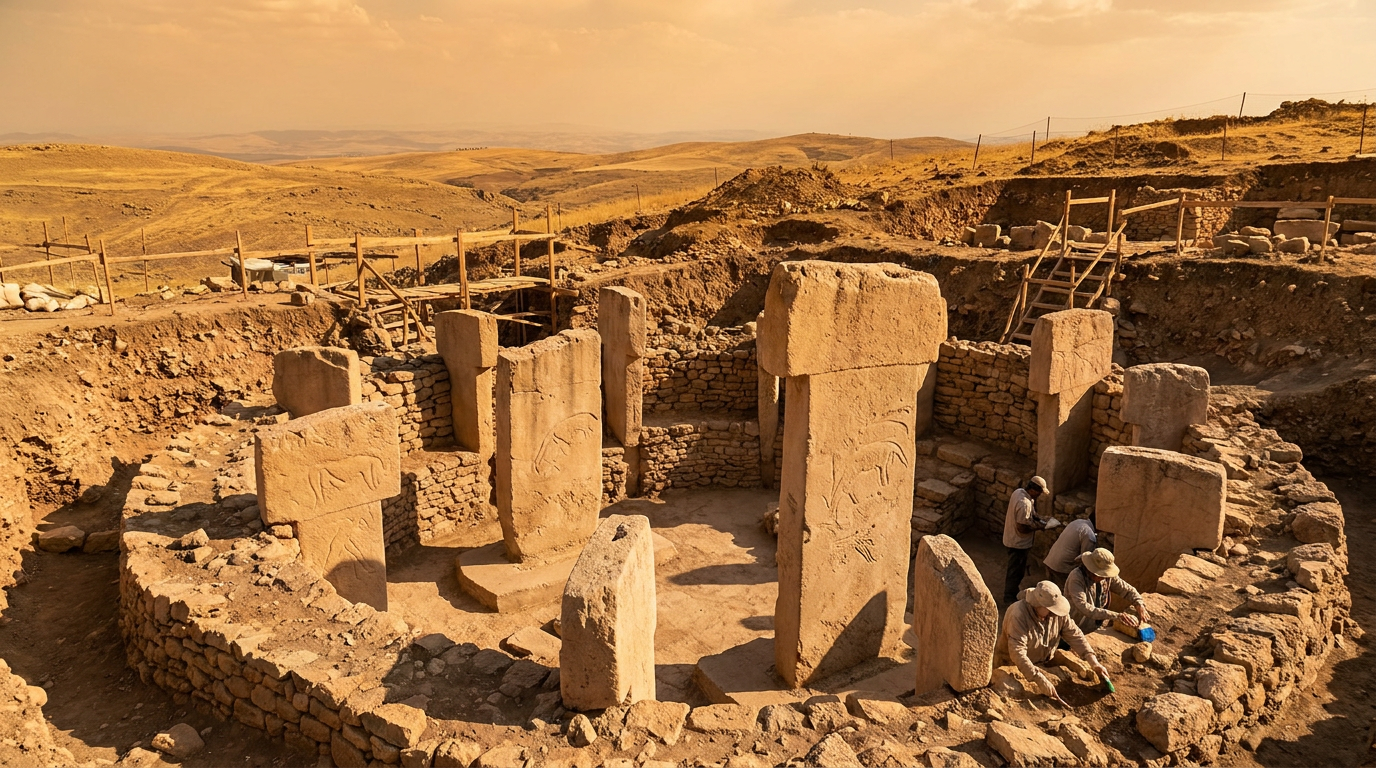
Yes, Gobekli Tepe is older than the pyramids of Giza by roughly 7,000 years. Radiocarbon dating places the oldest layers of Gobekli Tepe at approximately 11,600 years ago, around 9600 BCE, while the Great Pyramid was built about 4,500 years ago, around 2560 BCE.
That gap matters because Gobekli Tepe was raised before pottery, before writing, before the wheel, and before most researchers thought organized construction was even possible. The site forced archaeology to rethink when complex human society actually began.
How Old Is Gobekli Tepe Compared to the Great Pyramid?
Gobekli Tepe sits in southeastern Turkey, near modern Sanliurfa, and its oldest structures date to roughly 9600 BCE based on radiocarbon samples from fill material and organic remains found at the site.
The Great Pyramid of Giza, by contrast, was built around 2560 BCE during Egypt’s Fourth Dynasty. Set the two side by side and Gobekli Tepe predates Egypt’s most famous monument by more than seven millennia, a wider gap than the one separating the pyramids from today.
Why This Timeline Confused Archaeology
Before excavation began in the 1990s under German archaeologist Klaus Schmidt, the standard model held that monumental architecture required settled agriculture first. Farming produced surplus food, surplus food produced free labor, and free labor produced temples, or so the theory went.
Gobekli Tepe breaks that sequence. Its massive T-shaped limestone pillars, some carved with animal reliefs and arranged in circular enclosures, were raised by communities that current evidence suggests were still hunting and gathering, not farming full time.
That single fact reversed a widely taught order of operations. Religion and communal building may have come before agriculture at this site, not after it.
What the Radiocarbon Dates Actually Show
Radiocarbon dating measures the decay of carbon-14 in organic material, like charcoal or bone, recovered from the same layers as the stone structures. At Gobekli Tepe, samples from the oldest enclosures consistently cluster around 9600 to 8800 BCE.
Archaeologists treat these ranges as reliable for dating the construction phases. The exact reasons the pillars were carved, and why the site was later buried, remain open questions rather than settled facts.
The Unresolved Mystery of Why It Was Buried
At some point after construction, the enclosures at Gobekli Tepe were deliberately filled in with rubble and soil, which is partly why the site survived so well preserved for thousands of years.
Why anyone buried a monument that took enormous labor to build is still debated. Some researchers propose ritual closure. Others suggest a shift in belief systems replaced the old structures with new ones nearby. Treat both as working theories, not confirmed history.
What This Means for How We Understand Ancient Construction
Gobekli Tepe’s age resets the baseline for every later feat of engineering, including how the pyramids were actually built centuries later with far more advanced tools and organized labor.
It also reframes the broader pattern behind megaliths that still defy modern tools, since Gobekli Tepe proves monumental stonework predates the settled societies historians once assumed were required to produce it.
That same pattern fuels ongoing arguments over lost ancient high-tech claims, though mainstream archaeology attributes Gobekli Tepe’s construction to organized human labor and simple tools, not to any unproven advanced technology.
Frequently Asked Questions
Is Gobekli Tepe really older than Stonehenge and the pyramids? Yes. It predates the Great Pyramid by about 7,000 years and Stonehenge by roughly 6,000 years, based on widely cited radiocarbon ranges.
Who built Gobekli Tepe if agriculture did not exist yet? Current evidence points to hunter-gatherer communities, though some researchers argue early small-scale farming may have already been underway nearby. This remains debated.
Why is Gobekli Tepe considered the oldest known temple? Its circular stone enclosures with carved pillars are widely regarded as the earliest monumental religious structures found so far, predating any confirmed farming village of comparable scale.