

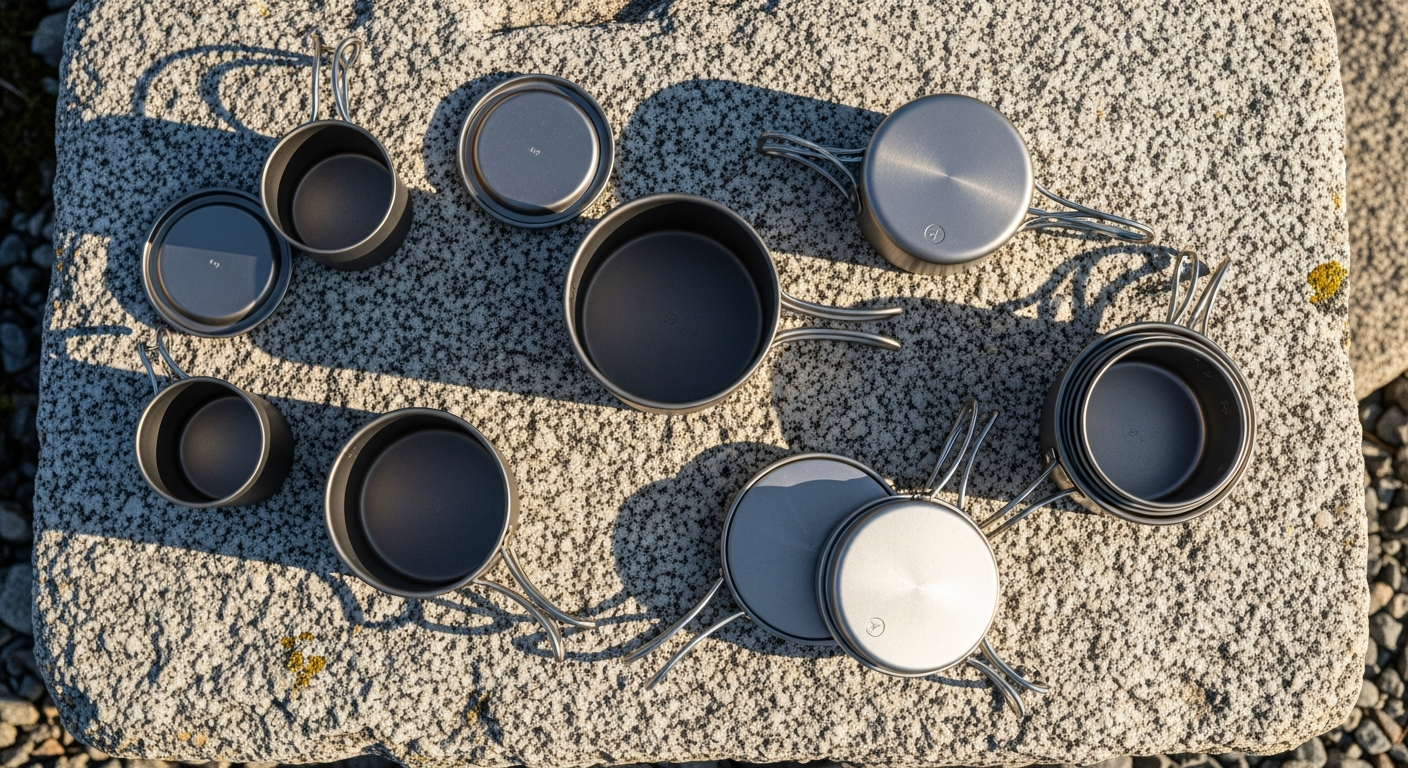
Camping Cookware That Survives the Backcountry
The cookware you carry determines what you eat, how long setup takes, and whether you’re scrubbing a pot at midnight. Get it wrong and you’re carrying dead weight.
This guide breaks down every major cookware category by material and trip type, so you can pick a system that matches how you travel.
Titanium: The Ultralight Standard
Titanium cookware is the go-to for thru-hikers and weight-obsessed backpackers. A single titanium pot can weigh under 100 grams, which matters on 20-mile days.
The tradeoff is heat distribution. Titanium conducts heat unevenly, producing hot spots that scorch oatmeal if you stop stirring. It handles boiling and simple one-pot meals well, nothing requiring steady even heat.
Titanium costs significantly more than aluminum or stainless at every tier. It earns its price only if ounces genuinely affect your performance on trail.
Aluminum: The Practical Middle Ground
Hard-anodized aluminum is what most camp cooks actually use. It heats evenly, costs a fraction of titanium, and the anodized surface prevents the metallic taste you get with bare aluminum.
Standard aluminum scratches easily and reacts with acidic foods over time. The hard-anodized version solves both. For three-season backpacking and family car camping, it hits the best value point of any material here.
Stainless Steel: Built for Abuse
Stainless steel cookware is heavier than titanium or aluminum, but it handles heat abuse that would warp lighter materials. It suits base camps, canoe trips, and group cooking where pots take real punishment.
Its real advantage is longevity. A quality stainless pot outlasts a decade of hard use without warping, delaminating, or pitting.
Nesting Sets vs. Single-Pot Systems
A nesting cookware set stacks multiple pots, lids, and sometimes a frying pan into a compact footprint. Most four-person sets include a large and medium pot, all fitting inside each other. Keeping gear systems organized before a trip matters as much in the backcountry as anywhere else. Read more in this guide on recognizing when your systems are failing you.
Single-pot systems are purpose-built for solo hikers or ultralight duos: one pot, a lid that doubles as a pan. The MSR Pocket Rocket-style integrated setups nest the pot, stove, and fuel canister into a package that fits in your palm.
Integrated Stove Systems
Integrated stove-and-pot systems like the Jetboil Flash or MSR WindBurner couple the burner directly to a heat-exchanger pot. Boil time runs about two minutes on a calm day, using less fuel than standard canister stoves in cold conditions.
The weakness is versatility. The pots are tall and narrow, designed for boiling only. If your meals go beyond freeze-dried pour-and-eat, a standard stove-and-pot setup gives more flexibility.
Matching Cookware to Trip Type
Solo backpacking under five days: a single titanium or hard-anodized aluminum pot in the 750ml-1L range covers almost everything. Pair it with a full ultralight kit and pack weight stays manageable.
Group car camping calls for stainless or thick-aluminum sets rated for four or more. Weight is irrelevant; capacity and durability matter.
Fast alpine objectives lean toward integrated systems where fuel efficiency in wind and cold is the priority. Canoe routes fall between backpacking and car camping, where you can afford a heavier stainless set because weight distributes across the boat.
When remote work mixes with outdoor time, connectivity planning is part of gear planning. The portable wifi vs eSIM vs local SIM breakdown applies at any base camp with cell signal.
Frequently Asked Questions
Is titanium cookware worth the price for casual backpackers?
For occasional weekend hikers, no. Hard-anodized aluminum delivers 90% of titanium’s performance at a fraction of the cost. Titanium’s weight savings pay off on multi-day trips where grams stack up over miles, not on a couple of weekends per year.
Can I use backpacking cookware on a car camping trip?
Yes, but it’s undersized for groups. A solo pot holds 750ml-1L, fine for one person but awkward for four. Car camping with multiple people is easier with a dedicated nesting set and a pot in the 3-4L range.
What’s the best camping cookware material for cold weather?
Material matters less than your stove system. An integrated heat-exchanger stove like the Jetboil Flash performs far better below 20F than any standard canister stove, regardless of pot material. Pre-warm your fuel canister in a jacket pocket before cooking in extreme cold.