

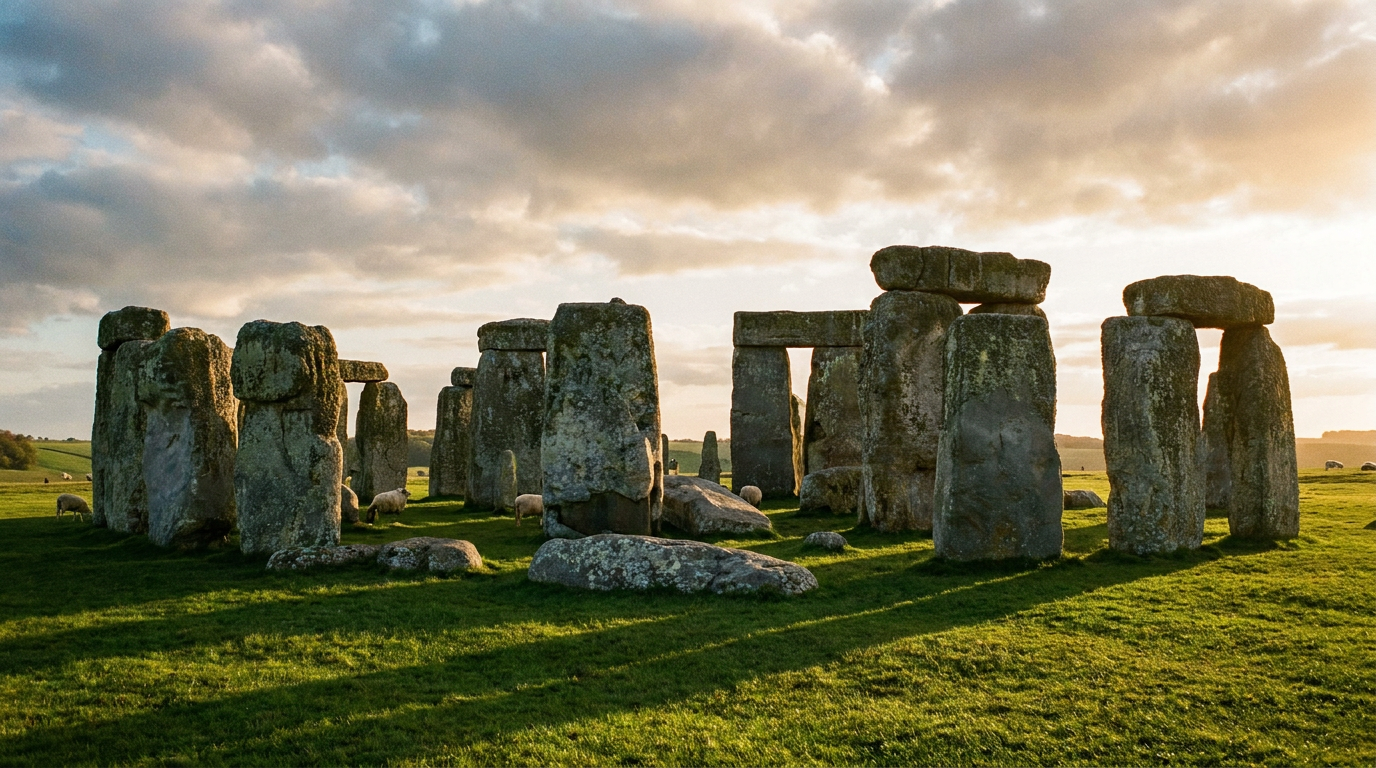
Stonehenge is not one monument built in one go. Archaeologists have identified at least three major construction phases spanning roughly 1,500 years, each one reshaping the site and likely carried out by different generations who never met the builders before them.
That timeline matters because it explains why the ditch and bank came first, why timber posts once stood where stone circles stand now, and why the bluestones got moved and rearranged more than once. Stonehenge history reads less like a single blueprint and more like a monument several communities kept returning to and changing.
Phase One: An Earthwork Enclosure, No Stones Yet
The earliest version of Stonehenge, built around 5,000 years ago, had no upright stones at all. Neolithic builders dug a circular ditch and piled the excavated chalk into an inner bank, creating an enclosure roughly 100 meters across.
Inside that boundary sit the Aubrey Holes, a ring of 56 pits cut into the chalk. Cremated human remains turned up in several of them, which tells archaeologists this first phase already functioned as a burial ground, long before it looked anything like the Stonehenge people picture today.
Phase Two: Timber Posts Standing Where Stone Would Later Go
For several generations after the earthwork was dug, the site held wooden posts rather than stone. Postholes found within the enclosure suggest a timber structure, possibly more than one, interpreted as either a building or a ritual setting.
Only later did the first stones arrive: smaller bluestones hauled roughly 150 miles from Wales. Exactly how builders positioned that first stone arrangement is still debated, part of the same open question covered in who built Stonehenge and how they moved the stones.
Phase Three: The Sarsens Arrive and the Iconic Shape Appears
The Stonehenge recognizable today, an outer circle of massive sarsens topped with lintels and a horseshoe of trilithons inside, dates to a later phase, roughly 4,500 years ago. These sarsens came from sandstone sourced closer to the site, quarried, shaped, and raised using methods still argued over the same way how the pyramids were really built gets argued over in Egypt.
Builders in this phase also repositioned the earlier bluestones inside the new sarsen structure. The monument gained a second material layer instead of replacing the first one outright.
Why the Bluestones Kept Getting Rearranged
Excavations show the bluestones did not stay put once they were set inside the sarsen circle. Archaeologists have traced at least two further rearrangements, with stones pulled up, repositioned, and reset into new patterns over the following centuries.
Nobody has found a written explanation for why. The likely answer, based on comparative work at other Neolithic sites, including the megalith sites that still defy easy answers, is that ceremonial priorities shifted, and each generation adjusted the monument to match.
When Building Finally Stopped
The last significant changes to Stonehenge’s stone layout happened roughly 3,500 years ago, closing out a construction window of about 1,500 years. The site kept its ceremonial importance long after, but nobody added or reset another stone at this scale.
That closing chapter is why “who built Stonehenge” has no single answer. Multiple communities across dozens of generations left their own mark, and the monument standing on Salisbury Plain today is the sum of all of them, not the vision of one.
Frequently Asked Questions
How many building phases did Stonehenge go through?
Archaeologists generally count at least three major phases: the earthwork enclosure, a timber and early bluestone stage, and the sarsen circle with later bluestone rearrangements.
Did the same people build every phase of Stonehenge?
No. The construction window spans roughly 1,500 years, so different generations and likely different communities carried out each phase.
Why were the bluestones moved more than once?
Excavations show at least two later rearrangements of the bluestones inside the sarsen circle, though the exact ceremonial reasoning behind each change isn’t confirmed by direct physical evidence.