

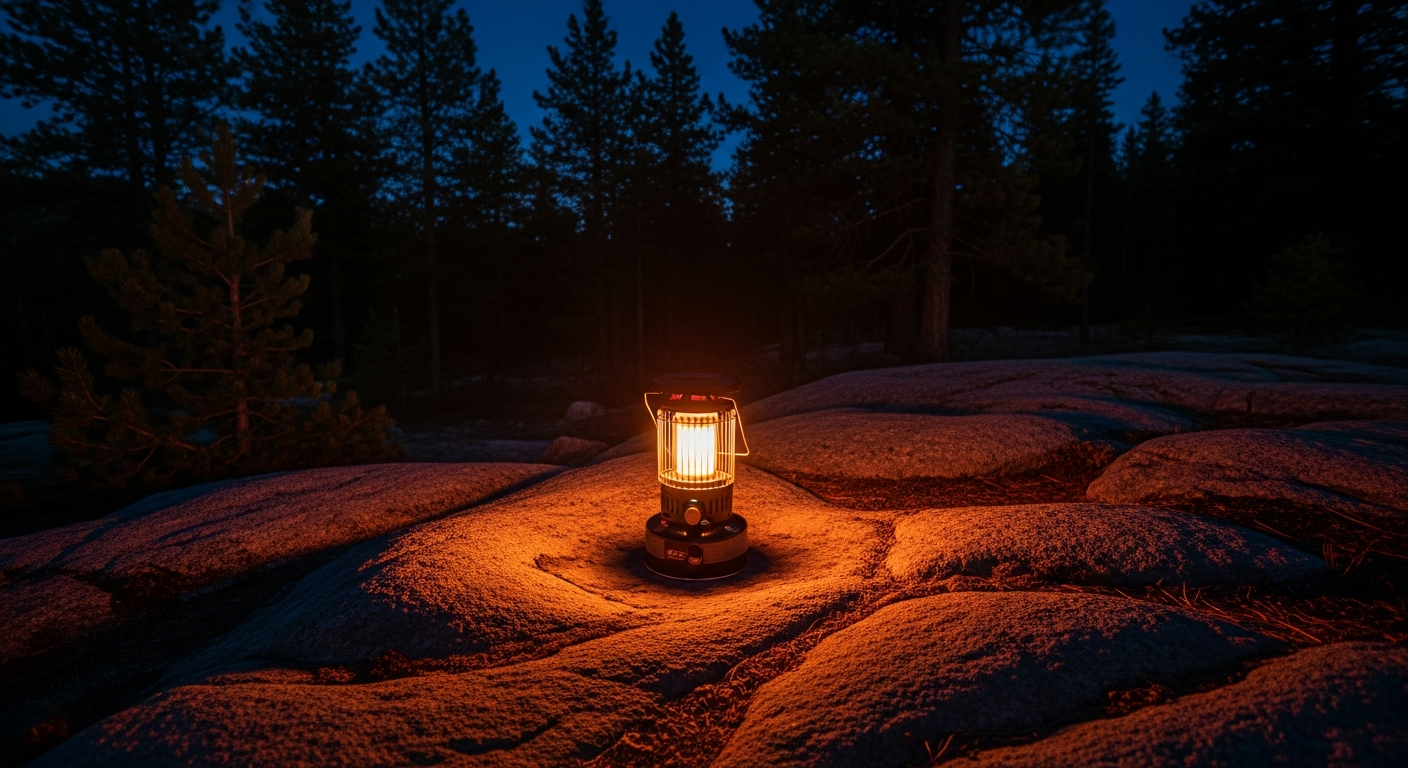
Cold nights kill camping trips faster than bad weather. The right camping heater keeps your tent livable from sundown to sunrise, but pick the wrong one and you are dealing with real carbon monoxide risk, not just discomfort. Safety leads here. Everything else follows.
Carbon Monoxide Is the First Conversation
Any fuel-burning heater, including propane and catalytic models, produces carbon monoxide. CO is odorless, colorless, and lethal at sustained exposures that build up inside a sealed tent faster than most people expect.
The rule is non-negotiable: never run a fuel-burning heater in an enclosed tent without ventilation. Keep a flap cracked, use a mesh inner, or run the heater outside and trap residual warmth. A CO detector rated for recreational vehicles is cheap insurance and belongs in your kit alongside the heater.
Tip-over shutoff is the other hard requirement. Any heater worth buying automatically cuts fuel flow if the unit falls. Verify this feature exists before you buy, not after you unbox it at the trailhead.
Propane Radiant Heaters
Propane radiant units, like the Mr. Heater Buddy line, are the most common choice for car camping. They connect to standard 1-lb cylinders or, with an adapter hose, to larger tanks for extended trips.
Output typically ranges from 4,000 to 18,000 BTU. A 4,000 BTU setting handles a small tent in moderate cold; higher settings suit vestibules or brutal nights. Ventilation remains non-optional even on indoor-safe models. If you also want to sleep well once the tent is warm, the guide to the best camping pillows for backpacking covers what actually matters without adding weight.
Catalytic Heaters
Catalytic heaters burn propane through a chemical reaction rather than an open flame, producing lower CO output than standard radiant burners. They run quieter and are gentler on dry air.
The tradeoff is lower maximum BTU, which makes catalytic units better for shoulder-season trips than deep winter. For a well-vented canvas tent or rooftop setup needing steady overnight warmth, they perform well.
Electric Heaters for Hookup Sites
At sites with 15A or 30A shore power, a ceramic or panel electric heater sidesteps fuel logistics entirely. No CO risk, no cylinders to haul, no open flame near tent fabric.
Wattage determines output: a 750W unit handles a small tent cabin, a 1,500W ceramic fan heater works for larger canvas or hard-sided campers. Thermostatic control prevents it from burning power at full tilt all night.
Electric is the cleanest option when hookups are available. If you are weighing hookup-site camping against longer nomadic arrangements, the coliving vs apartment vs housesitting cost breakdown puts the numbers in perspective.
12V DC Heaters for Overlanders
12V heaters draw from your vehicle battery or a lithium power station. They suit van builds and overlanding rigs where running a propane unit overnight in a sealed cab feels like unnecessary risk.
Output is modest, typically 150W to 300W, enough to take the edge off inside an insulated vehicle but not enough for a freestanding tent in freezing temps. Diesel-fired units from Webasto or Espar push serious heat at a higher price point. For nomads sorting connectivity alongside power and warmth, the comparison of portable WiFi, eSIM, and local SIM belongs in the same planning session.
How to Pick the Right One
Start with your shelter type. Canvas breathes; nylon seals. Fuel-burning heaters belong in canvas or well-vented structures, not in sealed synthetic tents.
Match BTU to square footage: roughly 20 BTU per square foot in moderate cold, 30-40 BTU in sub-freezing conditions. A 4-person tent at 60-80 square feet needs 1,500-3,000 BTU for most shoulder-season situations.
Check certifications. In the US, look for CSA or UL listings. These confirm the unit has been tested for tip-over, oxygen depletion, and overheat failures. A heater with no recognizable certification mark warrants skepticism regardless of price.
Frequently Asked Questions
Can you run a propane heater inside a tent overnight?
Not safely in a sealed tent. Even indoor-safe models with oxygen depletion sensors require ventilation. Crack a vent or door panel, keep a CO detector running, and turn the heater off before you fall asleep unless the product is explicitly rated for unattended overnight use.
What size heater do I need for a 4-person tent?
Most 4-person tents run 60-80 square feet. At 25 BTU per square foot in cold conditions, you need roughly 1,500-2,000 BTU for shoulder season and up to 3,000 BTU near freezing. A mid-range propane unit on its low setting covers this range comfortably.
Are electric camping heaters safer than propane?
For CO risk, yes, entirely. Electric heaters produce no combustion gases. The concern shifts to overloading the circuit at hookup sites and keeping the unit clear of tent fabric. At non-hookup sites they are not practical without a large power station backing them up.