

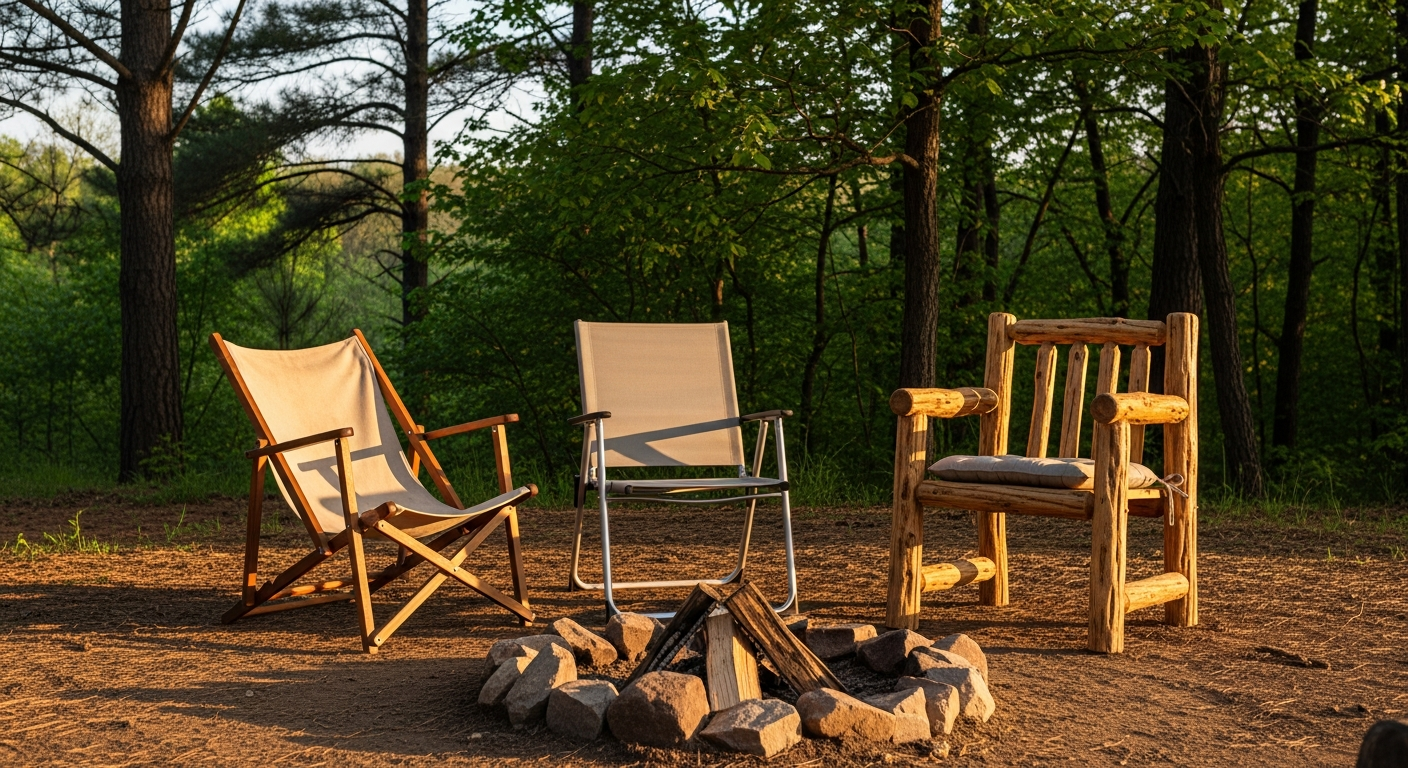
The best camping chairs do one thing well: keep you comfortable when the trail ends and the fire starts. That sounds simple until you’re hunched over a flimsy seat at mile 47, wishing you’d done more research. Here’s what actually separates a chair worth carrying from one that collects dust in your gear closet.
Low Chairs: Ground-Level Comfort Without the Bulk
Low-profile camp chairs sit 8 to 12 inches off the ground, keeping your center of gravity close to earth. That stance feels natural around a campfire ring and pairs well with low camp tables.
The trade-off is getting in and out. If your knees aren’t happy with deep flexion, a low chair will remind you of that after hour two. For everyone else, they’re one of the most relaxed ways to spend an evening outdoors.
Loungers: The Car-Camping Power Move
A camping lounger reclines fully or partially, giving you something close to a lawn chair experience. These aren’t the lightest option, but if you’re driving to the site, weight is rarely the deciding factor.
Good loungers have wide armrests, cup holders, and an adjustable reclining back. Pair yours with a quality camping pillow and you’ve built an outdoor recliner for under $100 in most cases.
Ultralight Backpacking Chairs: Every Gram Has a Vote
When you’re covering real miles, a ultralight backpacking chair under 2 pounds becomes a genuine luxury rather than a burden. The category starts around 14 ounces for bare stools and tops out near 1.5 pounds for chairs with actual back support.
The Helinox Chair One popularized this segment and remains the benchmark most competitors are measured against. Expect a tighter seat and less padding than heavier chairs. For thru-hikers and fastpackers, that trade is worth it.
If you’re auditing your full kit for a long trip, the same weight-versus-utility calculus applies everywhere. How you handle connectivity on the road is another decision worth thinking through before you leave.
Heavy-Duty Chairs: Built for the Person, Not the Pinterest Post
Standard camp chairs are rated for 250 to 300 pounds. Heavy-duty camping chairs start at 300 and go up to 500 or 600 pounds with reinforced frames and wider seats.
Steel frame construction adds real weight, often 10 to 15 pounds. Fine for base camping, tailgating, or any setup where the chair stays in the truck until you need it.
Rocking Chairs: More Practical Than They Sound
A camping rocking chair uses curved base rails instead of a flat footprint. On hard-packed dirt or pavement, it rocks smoothly. On soft grass, the motion dampens slightly, which many people prefer.
The rocking motion reduces lower back tension during long sits. They fold flat like a standard camp chair and weigh about the same.
How to Choose: Three Questions That Actually Matter
First, ask how you’re getting to camp. Backpacking means anything over 2 pounds needs a strong reason to be there. Car camping makes weight almost irrelevant compared to comfort.
Second, think about how long you’ll sit. A one-hour campfire is fine on a basic sling seat. Four hours calls for lumbar support, real armrests, and seat padding. Your spine will register the difference.
Third, weigh packability against setup time. Pole-and-sleeve chairs take 60 to 90 seconds to assemble. Folding chairs open in one motion. If you move camp often, that friction adds up. The same efficiency thinking applies when planning longer trips; comparing accommodation options follows the same logic as weighing coliving vs. apartment vs. housesitting costs as a long-term nomad.
What the Weight Tags Don’t Tell You
Seat height matters more than most buyers realize. Chairs under 12 inches feel intimate around a fire but awkward at a picnic table. Chairs over 18 inches are easier to stand from but feel out of place on uneven ground.
Fabric durability is the other underrated spec. Ripstop nylon handles moisture and abrasion better than standard polyester. In wet climates or near water, that difference shows up within one season.
Frequently Asked Questions
What is the most comfortable camping chair for long sitting sessions?
Look for a high back, padded armrests, and a seat height above 16 inches. Adjustable lumbar support or a slight recline angle cuts lower-back fatigue significantly. The Kijaro Dual Lock and similar designs are consistently rated well for extended car-camping use.
How light should a backpacking chair be?
Most experienced backpackers target under 2 pounds; serious gram-counters stop at 1 pound for a bare stool. A full-back chair under 1.5 pounds is the practical sweet spot for real support without sacrificing meaningful base weight.
Can you use a camping chair on sand or uneven ground?
Wide-leg frames and splayed feet handle soft surfaces better than narrow bases. For beach use specifically, look for chairs labeled “beach” or “sand” models, which feature wider rubber feet or a broader frame footprint to prevent sinking.