

The best camping dinner ideas don’t just feed you after a long day on the trail. They become the memory. That moment around a fire, pulling back foil to find something bubbling and fragrant, beats most restaurant meals on sheer satisfaction alone.
You don’t need a full kitchen. You need the right methods and a little prep before you leave home.
Foil Packet Dinners: The Foolproof Approach
Foil packets are the most forgiving technique in camp cooking. Seal protein, vegetables, and seasoning inside heavy-duty aluminum foil, lay the packets on hot coals, and wait about 20 minutes.
A reliable combination: chicken thighs, sliced potatoes, bell peppers, olive oil, and garlic powder. Prep them at home, store flat in a cooler, and cook with zero camp prep. Salmon with lemon and asparagus works just as well.
The key variable is heat. Coals that have turned gray and stopped flaming are what you want. Direct flame scorches the outside before the inside cooks through.
One-Pot Meals That Actually Taste Good
A single cast-iron pot covers chili, pasta, curry, and soups with minimal cleanup. Make-ahead chili is the smartest move: cook it at home, pack it sealed, and reheat in under 10 minutes. The flavor is better on day two.
For something faster, ramen upgraded with a pre-boiled egg, miso broth, and green onions takes four minutes. A good read on backpacking gear essentials covers weight decisions that affect what food you can realistically carry.
Skewers and Grill Grates: The Social Option
Shrimp, cherry tomatoes, and zucchini cook in under eight minutes with just salt, olive oil, and lemon. For red meat, pre-marinate flank steak strips the night before and cook hot and fast.
One rule worth following: soak wooden skewers in water for 30 minutes before you leave home and seal them in a zip bag. They won’t char before the food cooks.
Dutch Oven Cooking: When You Want to Impress
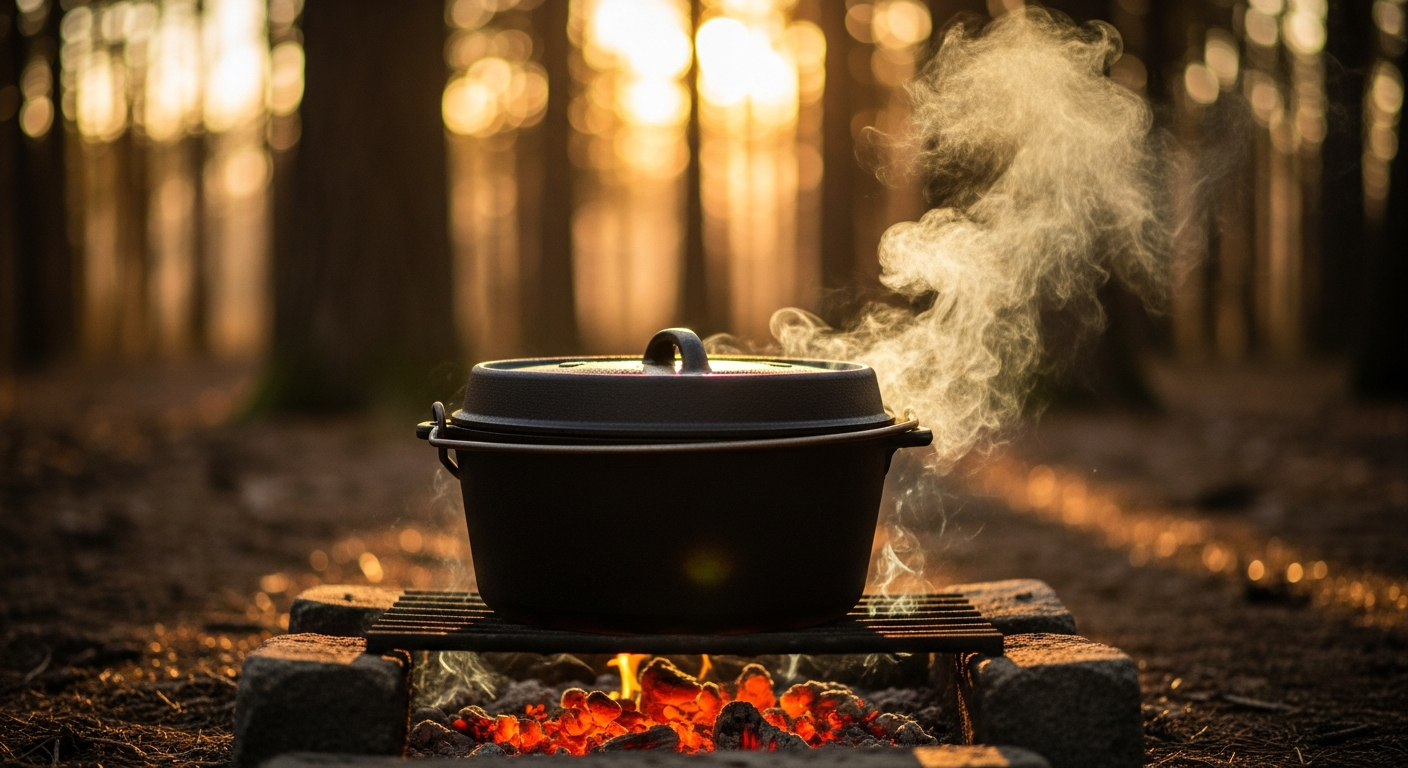
A Dutch oven over a campfire behaves like an oven and a braising pot at once. You can bake biscuits, braise short ribs, or make a cobbler with almost no technique required.
Campfire bread is the crowd-stopper. Mix dry ingredients at home, add water and oil at camp, and bake covered with coals on the lid for 30 minutes.
Make-Ahead Strategy: Front-Load the Work
Pre-chop every vegetable at home and store in labeled bags by meal. Pre-mix dry spice blends. Pre-cook grains so they only need reheating. You cut cook time in half and eliminate the worst camp-cooking problem: realizing mid-prep that you forgot something critical.
If you travel frequently and cook at different sites, the trade-offs between coliving, apartments, and housesitting often come down to kitchen access, which changes what prep is possible before heading out.
Desserts Worth the Calories
Banana boats take six ingredients and zero skill. Slice a banana lengthwise in the peel, stuff with chocolate chips and mini marshmallows, wrap in foil, and set on coals for eight minutes.
A cast-iron skillet brownie is the other reliable closer. Mix batter at home, store in a sealed bag, pour into a greased skillet at camp, and bake over medium coals for 20 minutes. For anyone meal-planning between locations, it’s worth reading up on portable WiFi vs eSIM vs local SIM options.
Frequently Asked Questions
What are the easiest camping dinners for beginners?
Foil packets are the best starting point. Prep everything at home, seal it up, and cook on coals. Chicken and potatoes, shrimp and vegetables, or sausage with peppers all work. Cleanup is just throwing away the foil.
How do you keep food cold and safe at a campsite?
Use a hard-sided cooler pre-chilled with ice a full day before packing. Keep raw meat on the bottom and minimize opening the lid. Block ice holds safe temperatures for three to four days.
Can you meal prep for camping the same way you would for the work week?
Yes, and it works even better. Pre-cook grains, chop vegetables, and store marinated proteins by day in labeled bags. You cut camp cook time to reheating and assembling, so you spend more time around the fire.