

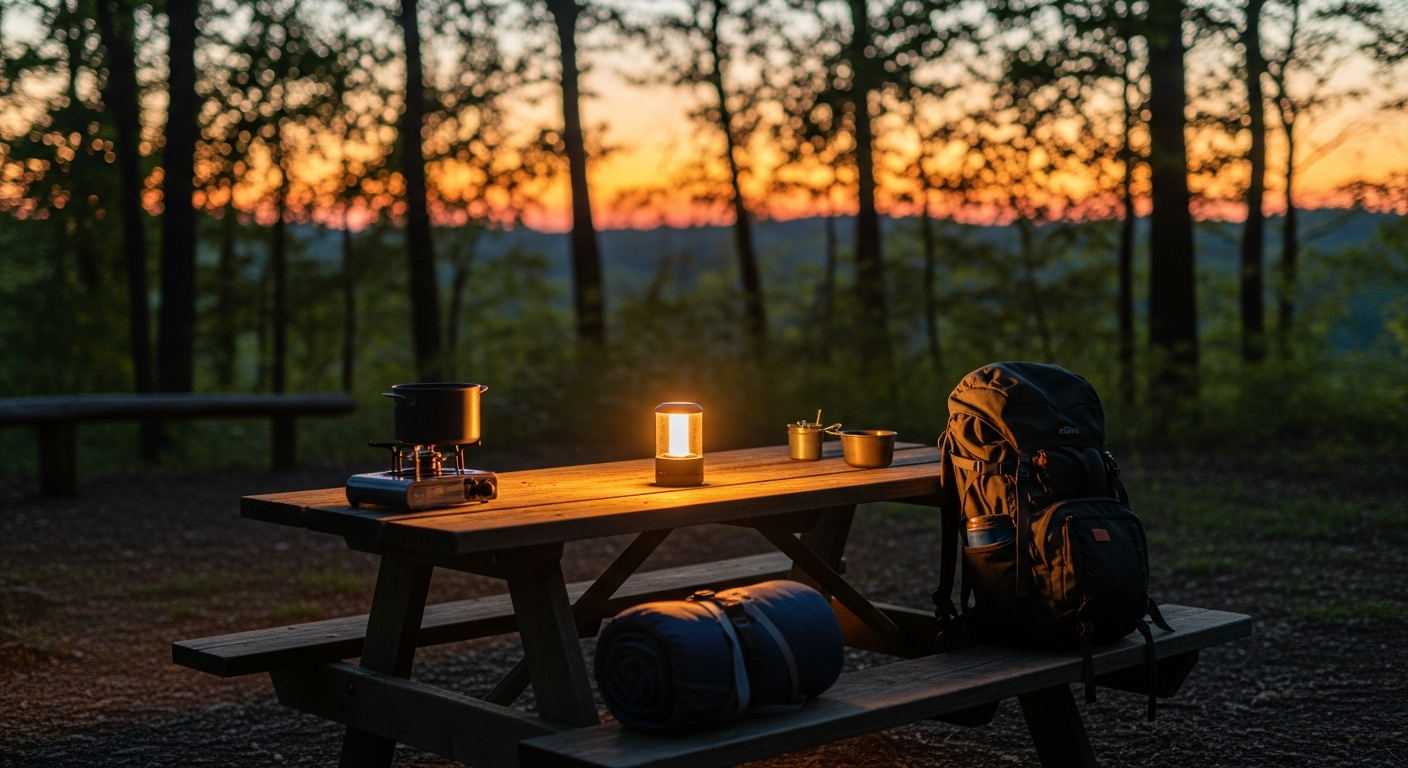
The Camping Lanterns That Actually Light a Campsite
Most camping lanterns look great in a gear photo and disappoint you by 9 PM. The difference comes down to three things: lumen output matched to the task, runtime that outlasts your night, and a light source you can recharge or replace in the field.
Rechargeable LED Lanterns: The All-Around Pick
A rechargeable LED lantern in the 300-1000 lumen range covers most camping scenarios, from tent reading to illuminating a four-person table. Models with USB-C charging double as a power bank, making them load-bearing gear rather than single-purpose weight.
Runtime catches people off guard. A 1000-lumen output typically lasts 4-6 hours on a charge. Drop to 150-200 lumens and that same charge stretches to 40+ hours. Learn the dimmer before you need it.
For tent use, 100-200 lumens diffused through a frosted globe handles reading and cooking without killing your night vision. For basecamp, a high-output model at 400+ lumens hung from a ridgeline lights a wide area cleanly.
Fuel Lanterns: Still Relevant for Extended Trips
Propane and liquid-fuel lanterns make sense when you are more than two nights from a charging source. A one-pound propane canister runs a dual-mantle lantern at full output for 5-7 hours, and canisters are easy to find at gas stations across the US.
The trade-off is weight, fragile mantles, and heat. Liquid-fuel models running on white gas perform better than propane below freezing, when canister pressure drops and output suffers.
String and Area Lighting: Underrated for Basecamp
LED string lights designed for camping draw 2-5 watts across a 10-20 foot run. Strung between trees or along a canopy, they produce broad diffused light that a single overhead lantern cannot replicate. A small battery pack can run them all night.
They are not a replacement for task lighting. For cooking or reading, you still need a dedicated lantern. Use string lights for ambient camp coverage and save the high-output lantern for when you need to see clearly.
This setup pairs well with a well-organized basecamp. If you are thinking through your sleep kit, the backpacking pillow guide covers cutting weight without sacrificing sleep quality on extended trips.
Headlamps as Lanterns: The Tent-Specific Workaround
A headlamp diffuser turns any headlamp into a makeshift lantern in seconds. Drop it into a translucent water bottle or use a silicone globe. The result is 360-degree soft light from gear you already carry.
For solo backpacking, this is the right answer. One item handles trail navigation, task lighting, and in-tent ambiance. The ceiling is around 150-200 usable lumens in diffused mode, enough for a two-person tent. Larger groups still need a dedicated lantern.
Lumen and Runtime Reference
Match output to the task. Solo tent reading: 50-150 lumens. Four-person table: 200-400 lumens. Group basecamp with a kitchen: 600-1000+ lumens, usually split across two sources.
Runtime figures on packaging are measured at minimum brightness, often 5-10 lumens. Always check the high-output runtime number. Lithium-ion cells also lose capacity below freezing, which is the same argument for choosing connectivity tools that hold up when infrastructure is unreliable: redundancy beats peak-condition optimization.
Which Lantern Fits Your Trip Type
Car camping: a rechargeable LED in the 500-800 lumen range plus string lights for ambient coverage. Weekend backpacking: headlamp with a diffuser, no separate lantern. Extended off-grid basecamp: propane dual-mantle backed by a small rechargeable for the tent.
One note before any multi-day trip: gear decision fatigue is real. The research behind burnout in high-intensity travel setups maps directly onto how over-preparation affects enjoyment in the field.
Frequently Asked Questions
How many lumens do I need for a camping lantern?
For a two-to-four person site, 300-500 lumens covers most situations. Solo tent use works at 100-200 lumens. Large group basecamps benefit from 700+ or multiple lanterns. Buying more output than you need shortens runtime on every charge.
Are rechargeable LED lanterns worth it over battery-powered models?
For most campers, yes. They cost less over time, charge via USB-C from a car or solar panel, and often double as power banks. The exception is cold-weather camping below freezing, where alkaline or lithium AA batteries outperform lithium-ion cells.
Can I use a headlamp instead of a camping lantern?
Yes, with a diffuser. A headlamp inside a translucent water bottle creates workable 360-degree light for a solo or two-person tent. It will not replace a high-output lantern for group cooking, but it eliminates one item from a backpacking kit.