

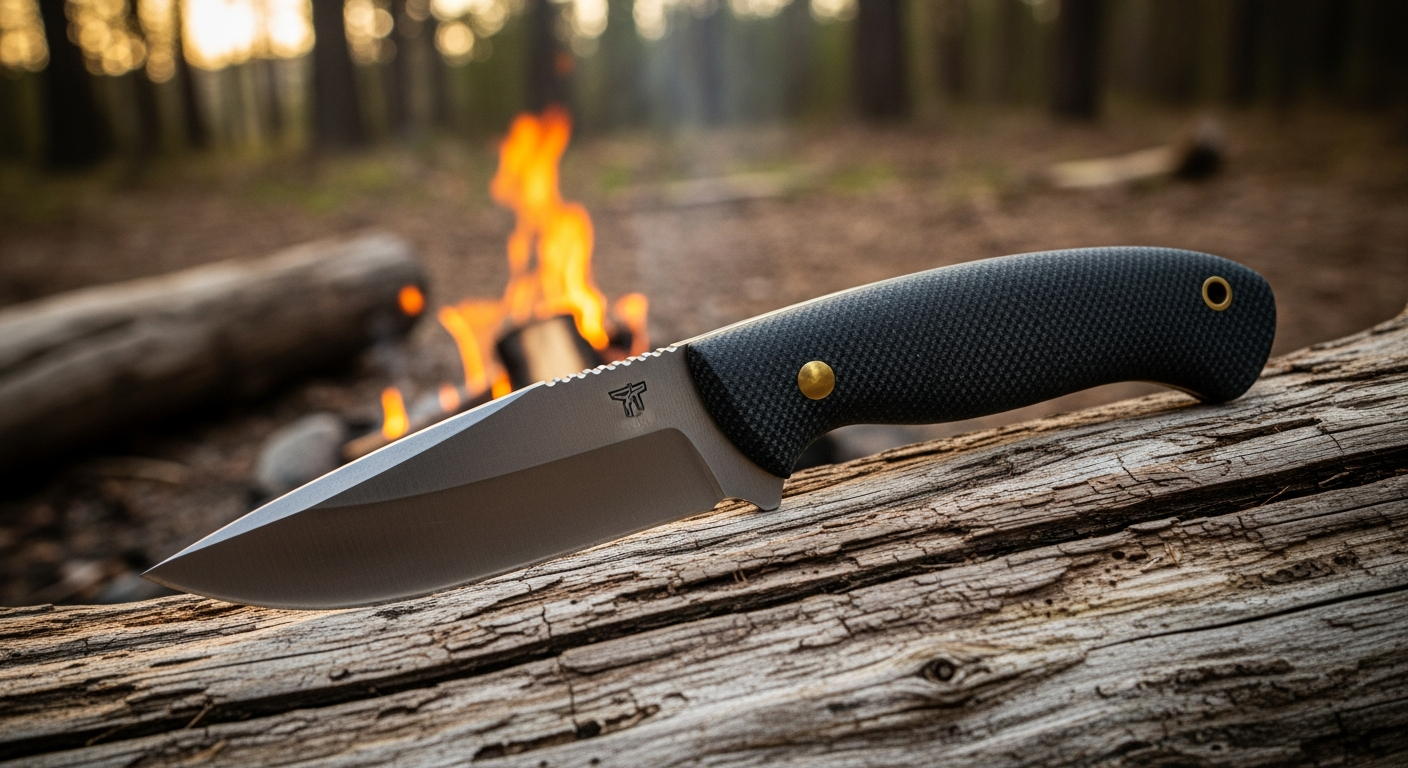
A fixed-blade knife is the single most useful tool you can carry into camp. No moving parts to fail, no pivot point to gunk up with pine sap, nothing to fold closed on your fingers mid-task. The right one handles everything from splitting kindling to prepping a catch, for decades.
Here is what separates a knife you will actually use from one that sits on a shelf rusting.
Blade Steel: The Decision That Outlasts Everything Else
Steel dictates edge retention, field sharpenability, and corrosion resistance. Two families matter: carbon steel and stainless steel.
1095 and O1 carbon steels sharpen fast on a basic field stone and hold a working edge. Leave one wet in a sheath for two days and you will scrub rust. A light coat of oil before storage keeps them honest.
Stainless alloys like AUS-8 and S35VN resist corrosion without babying. Harder grades require a ceramic rod or diamond stone, not a flat rock from the fire ring.
Tang Construction: Where Knives Actually Fail
The tang is the steel extending into the handle. A full tang runs the full length and width, pinned through two handle slabs. It is the only configuration worth owning for hard camp work.
Partial tang designs reveal themselves when you pry, baton wood, or use the pommel as a striker. The handle loosens or separates entirely, usually on a multi-day trip far from a gear shop.
Blade Size and Grind
Four to six inches covers camping tasks without becoming unwieldy. A Scandi grind bites cleanly into wood and resharpens on any flat stone. A flat grind splits the difference: durable edge, reasonable food performance, easy to maintain.
Wood processing: go Scandi. Food prep and detail work: flat or hollow. Most good all-around camp knives ship flat for exactly this reason.
Handle Material and Fit
Micarta and G-10 offer consistent grip in wet or cold conditions without warping. Natural wood looks better but needs more attention.
Fit matters more than material. The handle should fill your hand naturally without forcing you to adjust grip mid-task. The same logic applies across your backpacking gear decisions: comfort in the store predicts comfort in the field.
The Sheath: Often Overlooked, Never Unimportant
A quality sheath retains the knife on the draw, protects the edge, and allows one-handed re-sheathing without looking down. Kydex click-locks and is waterproof. Leather is kinder to the blade but requires conditioning and suffers in consistently wet conditions.
If the sheath on your chosen knife is obviously poor quality, budget for a replacement immediately.
Field Maintenance in Three Steps
After each trip: wipe the blade clean and dry, run a few light strokes per side on a ceramic rod or strop, then apply a thin film of mineral oil before storage. That is the full routine.
One consistent technique done regularly beats an aggressive rescue session twice a year. This same low-overhead thinking applies to everything you carry. The planning behind choosing portable WiFi versus eSIM versus local SIM follows identical logic: match the tool to actual conditions, then stop second-guessing.
The most capable campers often own one knife for ten years. If you find yourself cycling through blades hunting for a perfect one, it may be worth reading about the pattern where optimization loops replace actual doing. The best fixed-blade knife for camping is the one already on your belt at the trailhead.
Frequently Asked Questions
What blade length is best for a camping fixed-blade knife?
Four to six inches handles the full range of camp tasks without adding unnecessary weight. Most experienced campers settle near 4.5 to 5 inches as a practical all-day carry length.
Is carbon steel or stainless steel better for a camping knife?
Carbon steel sharpens faster and takes an aggressive edge, but rusts without care. Stainless suits wet or coastal trips but harder grades need better sharpening equipment. Both work depending on your environment.
Can I use a fixed-blade camping knife for food prep?
Yes. Rinse and wipe between foods, especially raw meat. A flat or hollow grind performs better for food work than Scandi. Stainless is the more practical choice if food prep is a regular priority.