

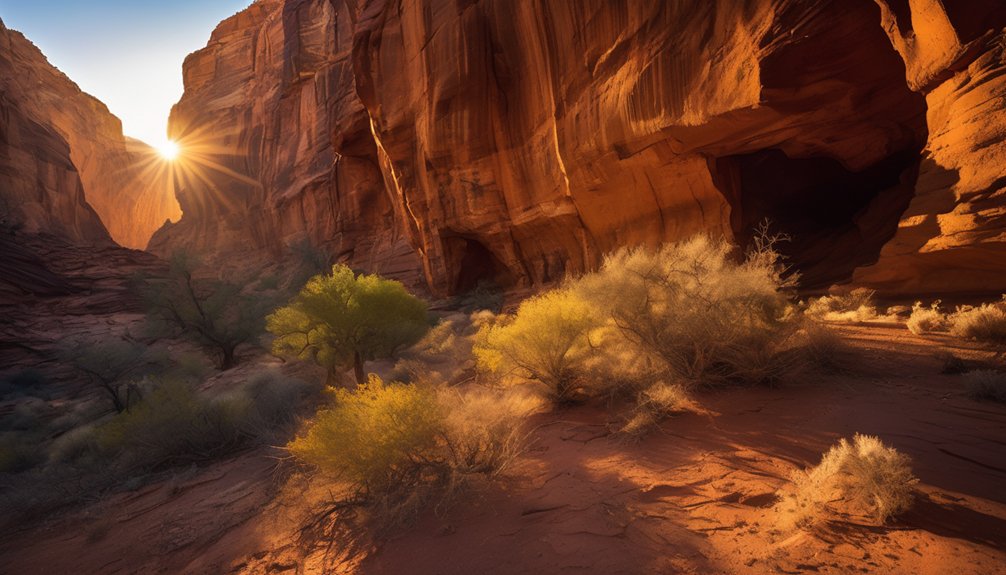
You won’t find solid proof that the Smithsonian is hiding artifacts related to the Grand Canyon Lost City. The institution has conducted significant research and shares many findings publicly. However, some questions about full transparency remain, as not all details about every artifact are openly discussed. The legend itself mixes history and myth, making it challenging to separate fact from fiction. Exploring the Smithsonian’s role reveals more about this intriguing story and its complexities.
Origins of the Lost City Legend
Although the legend of the Grand Canyon Lost City has intrigued explorers and historians for decades, its origins trace back to early Native American oral traditions and early 20th-century reports.
You’ll find that these stories often describe ancient civilizations believed to have inhabited remote canyon areas. These narratives blend historical accounts with mythical origins, creating a complex tapestry of mystery and culture.
Understanding these roots helps you appreciate how the legend evolved, reflecting both genuine cultural memory and imaginative interpretation. This background sets the stage for further exploration into the evidence and controversies surrounding the Lost City.
Examination of Archaeological Evidence
When you examine the archaeological evidence related to the Grand Canyon Lost City, you’ll find a mixture of artifacts, structural remains, and geological data that offer insights but also raise questions.
The archaeological findings include pottery shards, tools, and remnants of dwellings, which suggest past human activity.
However, inconsistencies in artifact preservation challenge the full understanding of their origin and age. Some materials have deteriorated due to environmental exposure, while others remain surprisingly intact.
This uneven preservation complicates efforts to piece together a clear history, requiring careful analysis to separate fact from speculation in this mysterious site.
Smithsonian’s Role and Public Transparency
Since the Smithsonian Institution has played a significant role in investigating the Grand Canyon Lost City, understanding its level of public transparency is essential.
You should know that Smithsonian transparency directly affects public trust, especially when dealing with sensitive archaeological discoveries. The institution routinely shares research findings, but questions remain about how openly it communicates about all artifacts.
If you value freedom and access to information, you’ll expect clear reports and accessible records.
Maintaining public trust requires the Smithsonian to balance scientific integrity with transparency, ensuring you and others can confidently explore the truth behind the Lost City’s mysteries.
Frequently Asked Questions
Who First Discovered the Grand Canyon Lost City Legend?
You’ll find the legend origins trace back to canyon explorers like G.E. Kinkaid, who claimed to discover mysterious ruins in 1909. These stories fuel your desire to uncover hidden truths and embrace adventure freely.
What Types of Artifacts Are Allegedly Hidden by the Smithsonian?
You’ll find that the alleged hidden artifacts include ancient relics like pottery, tools, and jewelry. These items supposedly come from excavation evidence that challenges conventional history, sparking your curiosity about what’s truly kept from public view.
How Do Local Indigenous Tribes View the Lost City Claims?
You’ll find local indigenous tribes often view the lost city claims skeptically, valuing their cultural perspectives and tribal legends over sensational stories. They want freedom to protect and share their history authentically, not have it exploited.
Has the Lost City Been Featured in Any Documentaries or Films?
Yes, you’ll find documentary explorations and cinematic portrayals diving into the lost city’s mysteries. These films let you freely explore theories and legends, sparking curiosity without restrictions or censorship.
Are There Ongoing Expeditions Searching for the Lost City Today?
Yes, modern expeditions are actively pursuing archaeological searches for the lost city. You can embrace the thrill of discovery and freedom by following these adventurous teams pushing boundaries beyond traditional exploration.